
Degreasing made easy
Degreasing made easy – considerable savings potential in powder coating and wet painting
Thanks to the unique ph-cleantec method, considerable savings in working time and costs are possible – with at least consistent quality
The most important process steps in preparing surfaces for subsequent painting or powder coating are degreasing, phosphating and drying. These tasks appear simple, and yet it is precisely here that a high quality level is often required so that a perfect result can be achieved in the subsequent coating.
Degreasing small batches
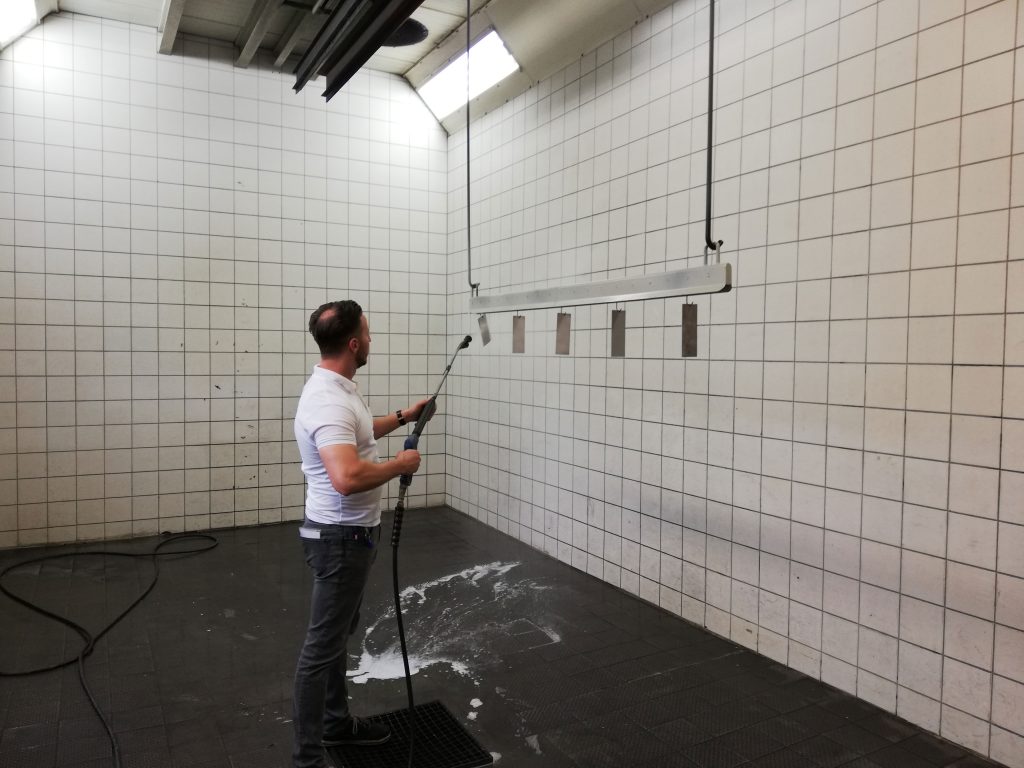
For companies that process various smaller batches, and where parts do not fit into existing washing systems because of their geometry, genuine automation is not worthwhile: the process is largely standardised, but ultimately cost- and time-intensive manual work. Often there are separate wash rooms for this, equipped with high-pressure cleaners, drains and corresponding collecting basins for water and chemicals. Since high-pressure cleaners do not degrease per se, this is ultimately done exclusively on the basis of the chemicals used. Given the high water throughput of the high-pressure cleaners, this involves enormous water consumption and – even with strong dilution – a considerable consumption of chemical cleaners too, with corresponding costs for procurement and disposal.
Degreasing with ph-cleantec
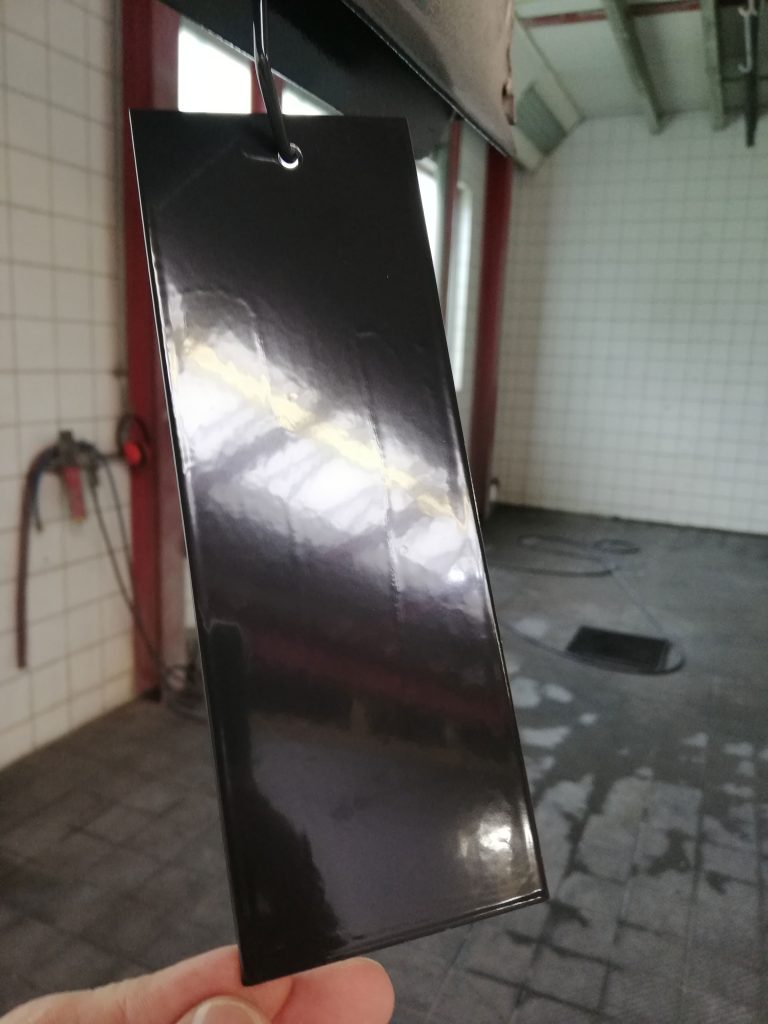
With the ph-cleantec method, by contrast, considerable time and cost savings are possible. Depending on the unit, ph-cleantec works with low pressure of up to 7.5 or up to 14 bar – so small parts too can be pretreated without any problem – and high temperatures of up to 95°C. The cleaning effect is achieved essentially via the high temperature, with which greases and oils in particular can be cleaned off especially efficiently. This process is supported by appropriate alkaline cleaners.
The low pressure, on the other hand, is entirely sufficient to carry away greases and oils without any problem, but at the same time implies a considerably lower consumption of water and thus of cleaners.
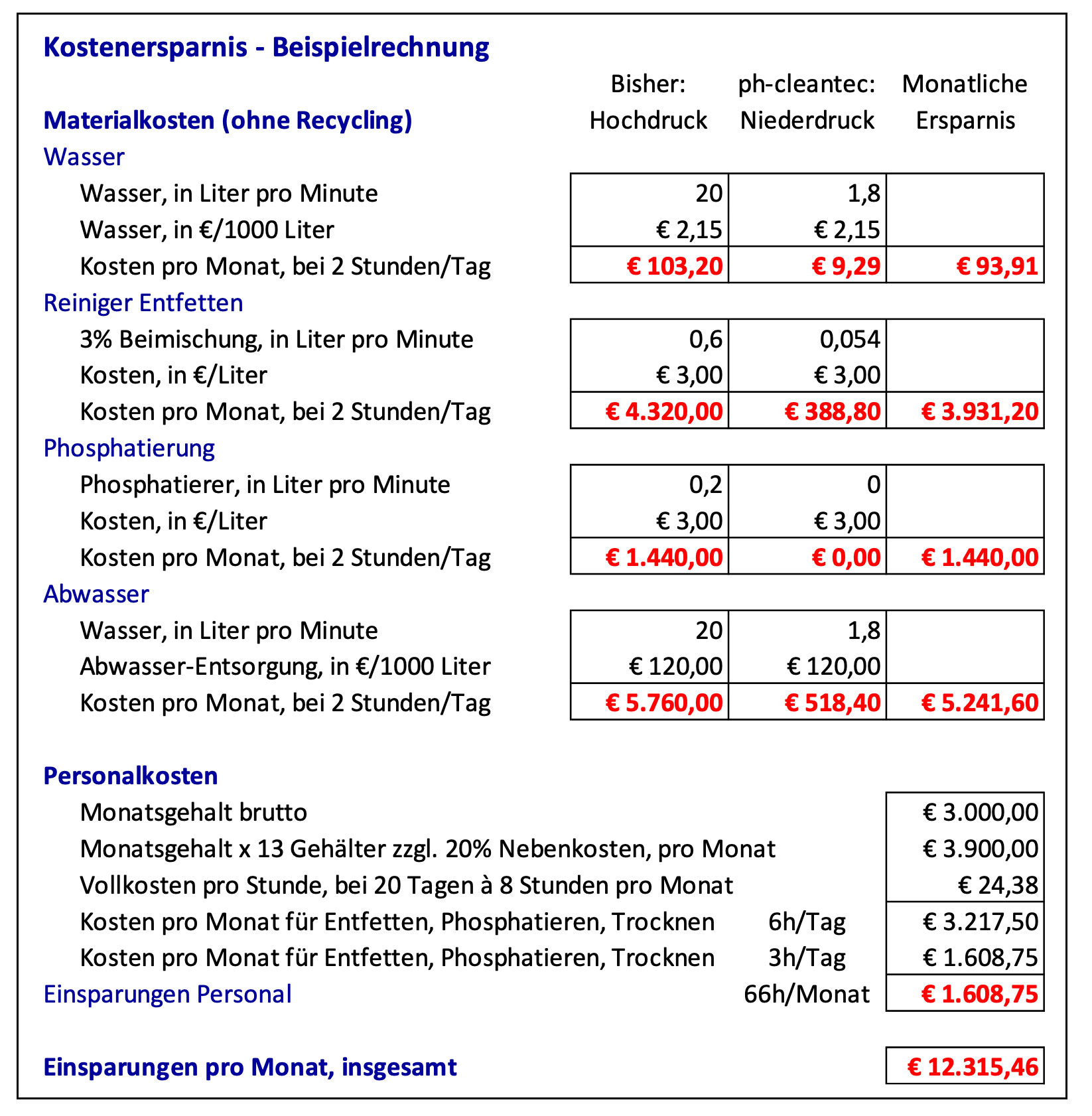
Concretely: while a high-pressure cleaner usually consumes around 20 litres per minute, ph-cleantec consumes up to 1.8 (7.5 bar) or 2.8 (14 bar) litres per minute, i.e. roughly one seventh to one tenth. This means a reduction in the costs for water, cleaner and disposal of 70–90%.
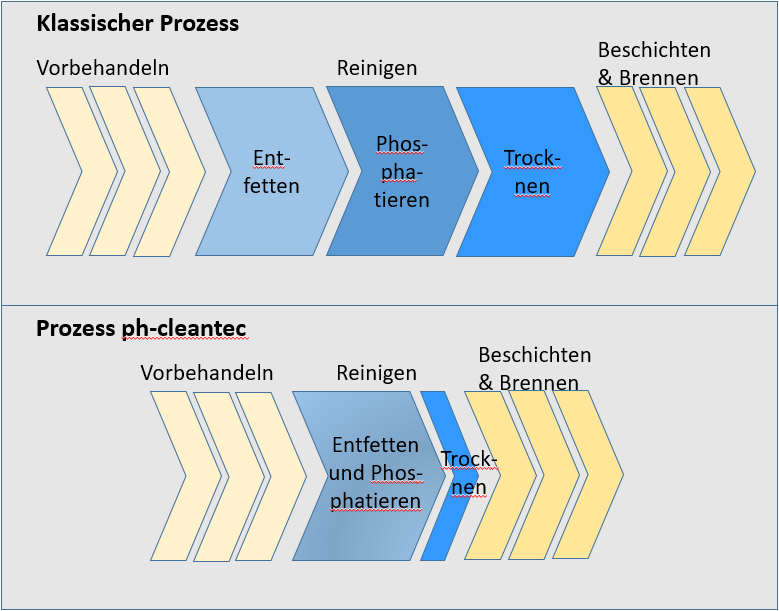
Degreasing, phosphating and drying in one step
Above all, practice shows that in many cases phosphating can be omitted entirely and drying reduced to a minimum. The reason for this is the high temperature in combination with the quality of the added (salt-free and mild-alkaline) cleaner: with non-foaming cleaners, the high temperature heats the treated surfaces so that they dry immediately over large areas. Only at the lower edges does a moisture edge remain, which can be easily removed with compressed air. In practice, three process steps thus become at most one and a half – much to the delight of the employees and the finance director. If phosphating cannot be dispensed with, this can be achieved with combined degreasing and phosphating products that are used in a ph-cleantec stainless-steel unit. In this way, cleaning and phosphating can be done in just one work step.
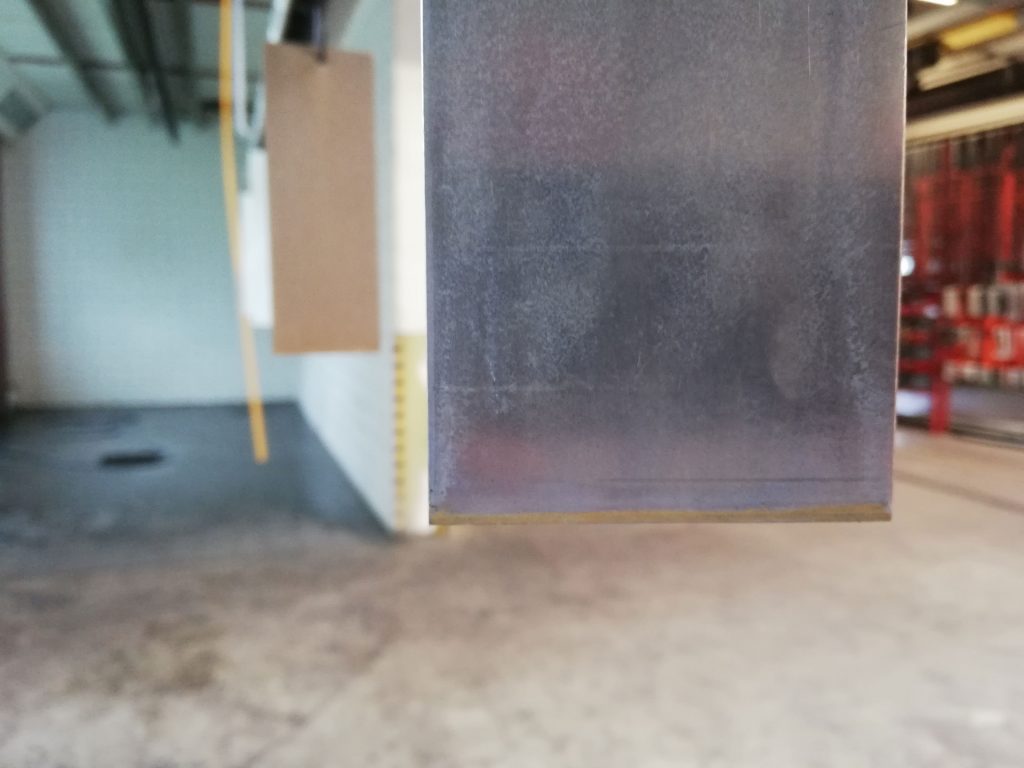
Thermal degreasing in practice – all tests passed with flying colours
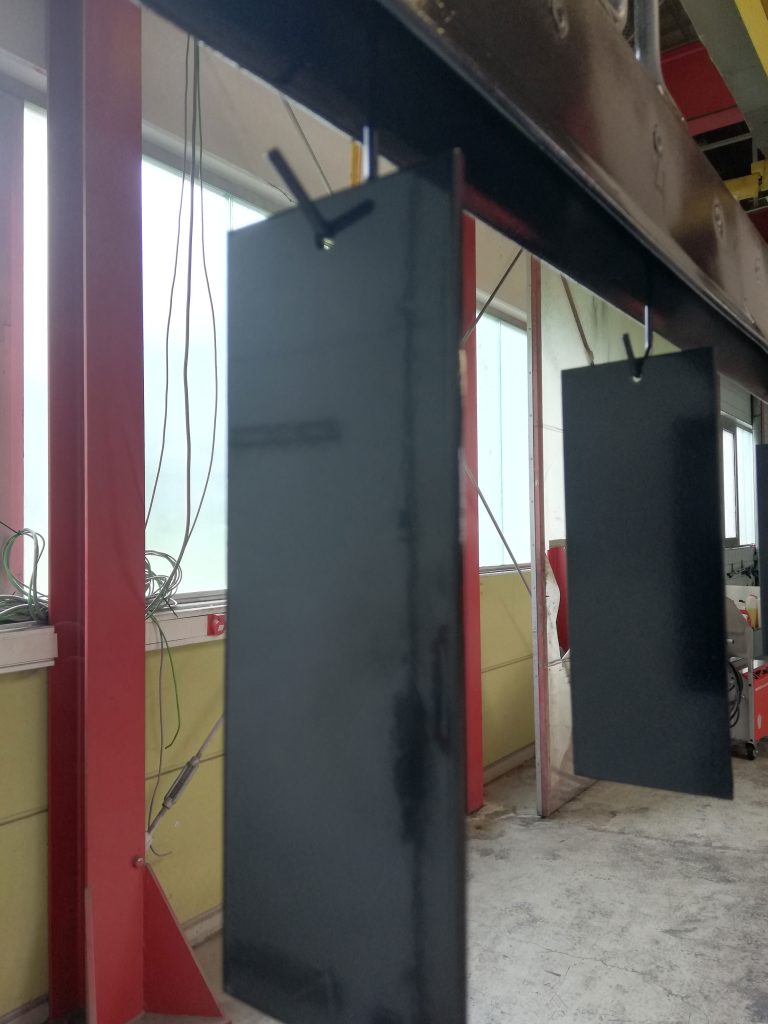
The method of thermal degreasing with the help of the ph-cleantec units works with all metals, e.g. steel, stainless steel and aluminium, both ground and unground.
For materials where the aqueous cleaning poses a corrosion risk, a cleaning agent with temporary corrosion protection can be added in minimal dosage. In this case too, the workpieces can be painted or coated directly – no residues remain. Even with demanding coatings up to high-gloss black, perfect results are achieved.
Thus the ph-cleantec method, in conjunction with the subsequent coating, meets the highest demands: in all cases it passed all tests without objection, in particular the drop test, the cross-cut test, and the salt-spray test in accordance with DIN EN ISO 9227.
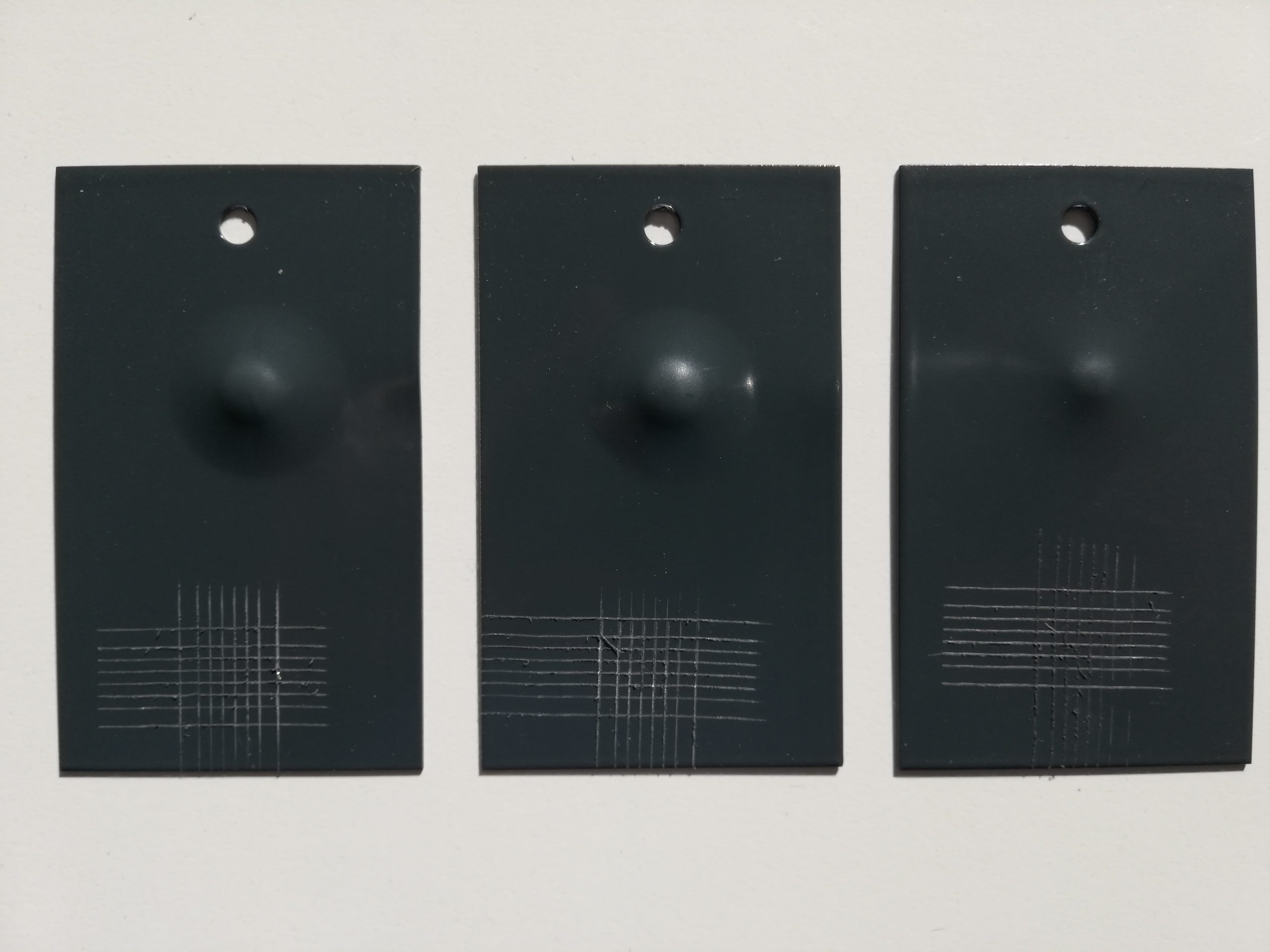
From left to right: unground aluminium, ground aluminium, steel
With a small wink, it may certainly be mentioned that the method also passes the ultimate test with flying colours:
When the ladies and gentlemen from quality management or even “the boss” were presented with two finished workpieces, one degreased and painted or powder-coated with the conventional method, one with the ph-cleantec method, they were unable to detect a difference in a single case.
Cost-effectiveness of the ph-cleantec method
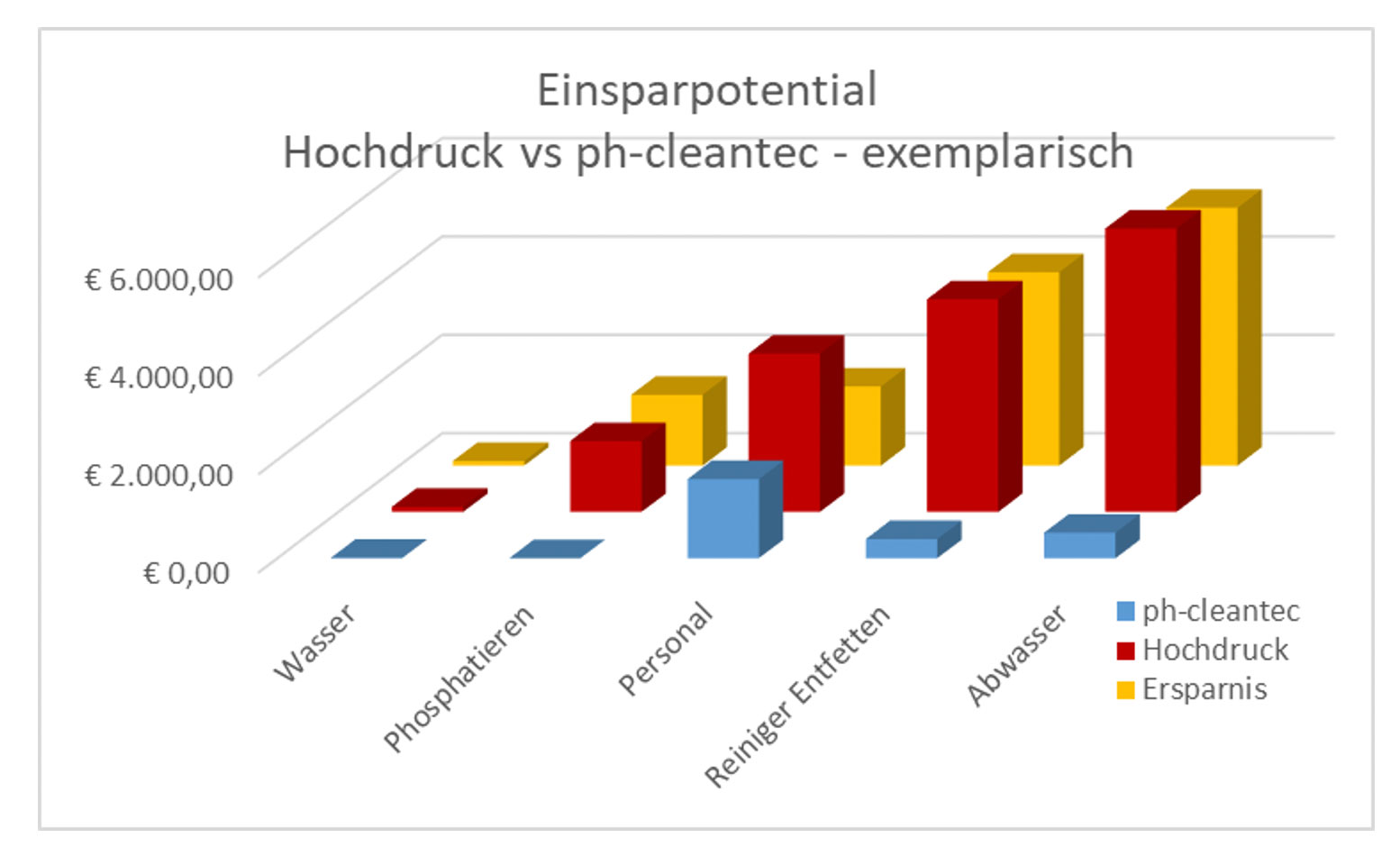
The result is impressive not only from a technical but also from a financial point of view, as the following example calculation shows.
Incidentally, working with low pressure is considerably more pleasant for the employees than with high pressure, since there is no splash-back and no protective suits are needed. Because of the low resource consumption, the ph-cleantec method also works correspondingly more environmentally friendly than other methods.
Frequently asked questions about degreasing
How do you degrease components without aggressive solvents or perchloroethylene?
Why does a high-pressure cleaner not degrease properly?
Is the method also suitable for small batches and complex geometries?
Is degreasing before painting or powder coating clean enough with this method?
How much can be saved when degreasing?
Which ph-cleantec unit is suitable for degreasing?

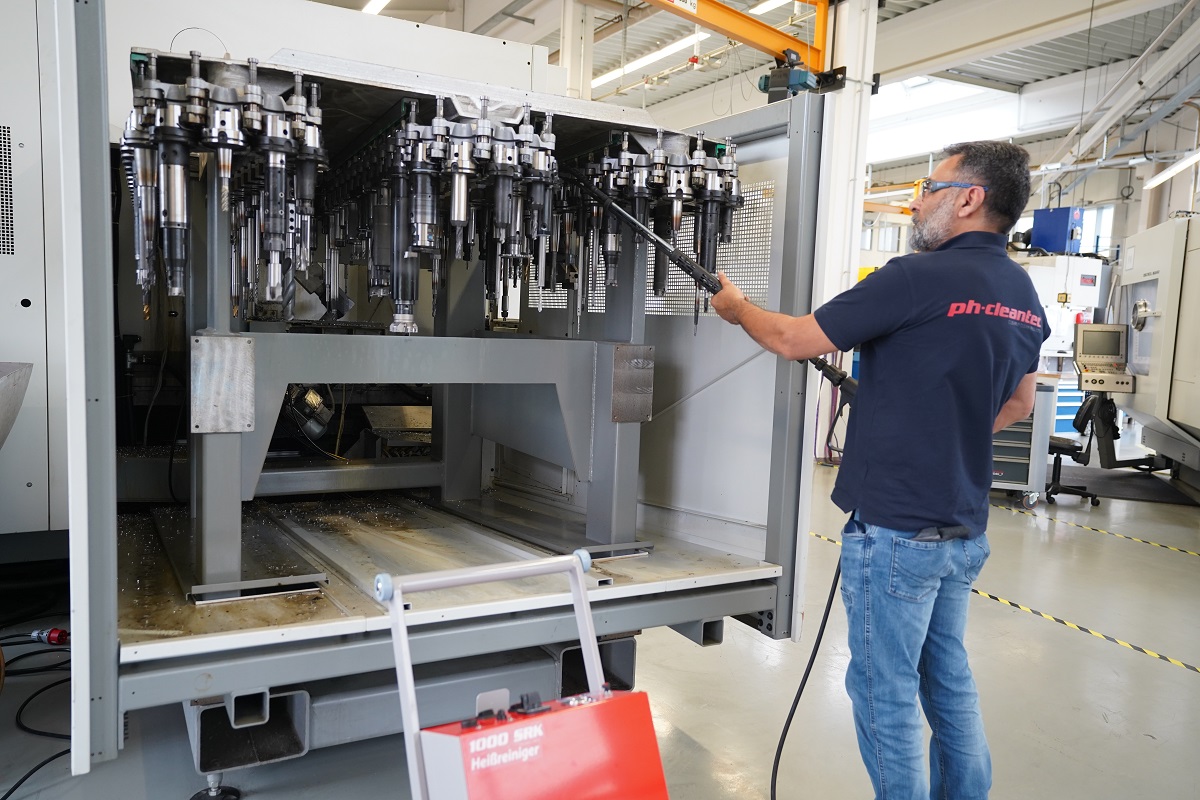
See it in your own operation
The most convincing thing is a direct comparison. We are happy to come to your company for a free demonstration – so you can see the savings in time, water and chemicals with your own eyes.
Request a free demonstrationCalculate amortisation