
Radiator cleaning
THE CHALLENGE
In practice, cleaning radiators often presents a particular challenge. The job is extremely laborious and time-consuming, and consequently unpopular. Often the result is rather unsightly, too – the before-and-after comparison is usually not very impressive.
Regular cleaning is particularly important, however, in areas where elderly or ill people spend time, because as well as fluff and fibres, pollen, spores and dust mites also settle on the radiators. When the radiators are switched on after a long summer, these particles are dispersed throughout the room and can be harmful to the elderly or the sick.
In factory halls, production halls and public buildings such as schools and offices, too, the radiators need cleaning only rarely, but occasionally the job simply has to be done.
PREVIOUS TECHNOLOGY
Radiators are traditionally cleaned by hand, usually with household or professional cleaning products that are added to the cleaning water or sprayed directly onto the surface. Despite the cleaning products, manual cleaning is time-consuming and requires a great deal of effort for the „scrubbing“.
The rear panels and the inner surfaces between the heating panels present a particular challenge time and again, as these are very difficult to reach – yet they accumulate dust, pollen, spores and mites just as much as the front surfaces do.
OUR SOLUTION
Hot cleaning in hospitals and homes for the elderly
One of the most remarkable applications of our technology is the cleaning of radiators in hospitals and care homes: these are usually cleaned once or twice a year, but residents are often unable to leave their rooms while the cleaning is taking place. Given their fragile health, it is essential that dirt – including lint and fibres, as well as dust mites, spores and pollen – is not spread throughout the room.
As it is difficult to get a cloth between the fins of a radiator, particularly with modern flat radiators, one of our customers uses our technology for cleaning: the radiators are sprayed from above, and the dirty water is collected at the bottom using a simple rectangular container. This works brilliantly, is extremely quick and does not disturb the residents.
Hot cleaning in factory and production halls
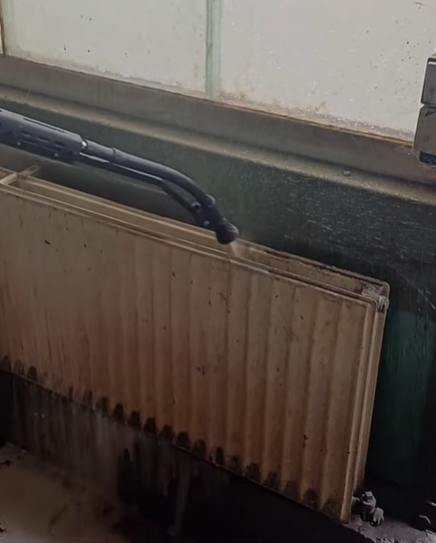
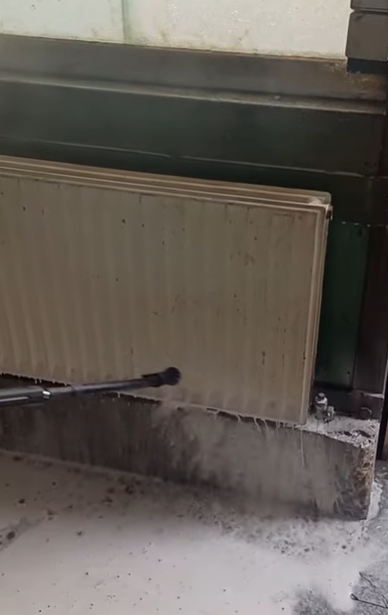
Low-pressure hot cleaning also works exceptionally well in factory or production halls, where flat radiators often become heavily soiled over time with fibres, dust and splashes of coffee or oil, and in many cases with films of oil from cooling lubricants. Here, too, the high temperatures of up to 95 °C quickly dissolve the dirt, which is then efficiently removed thanks to the low pressure. Also thanks to the low pressure, very little water is required, so it can either be collected in a 1000 KW-FP dirt water collection tray or easily vacuumed up with a wet vacuum cleaner.
It proves particularly helpful time and again that the radiators can be cleaned quickly and easily not only from the front but, with the aid of the correct lances, also from the rear and from the inside (between the panels) – in places that are practically inaccessible even when cleaning by hand.
YOUR BENEFITS
- Fast and efficient cleaning with minimal mechanical finishing – saving working time.
- Significantly more comfortable, quicker and more efficient than cleaning by hand.
- Easy access even to difficult areas, particularly rear and internal walls, thanks to practical spray lances.
- No flooding, no splash-back, no clouds of droplets, no spreading of dirt around the room – this protects staff and their surroundings.
- Cleaning with hot water, with little or no chemicals – hence minimal costs for procurement and disposal, and no health issues.
- Mobility: the units are mobile and, thanks to their own water tank, largely self-sufficient – ideal for on-site use.
- Environmental protection: hardly any chemicals and little water mean greater environmental sustainability and lower costs.
- Health: easy handling and no spray effects mean greater occupational safety for staff and no risk to the elderly or the sick.
In summary: low investment, resource-efficient and environmentally friendly, virtually no running costs, greater occupational safety, a significantly more pleasant working environment and noticeable savings in working time.
WHICH DEVICE IS RECOMMENDED?
For cleaning radiators we generally recommend our 1000 SRE, which has its own 60-litre water tank, so you can work without a water connection and without dragging a (cumbersome) garden hose behind you. If that is not an issue, our 1000 SRK-AS-EA is a suitable alternative.
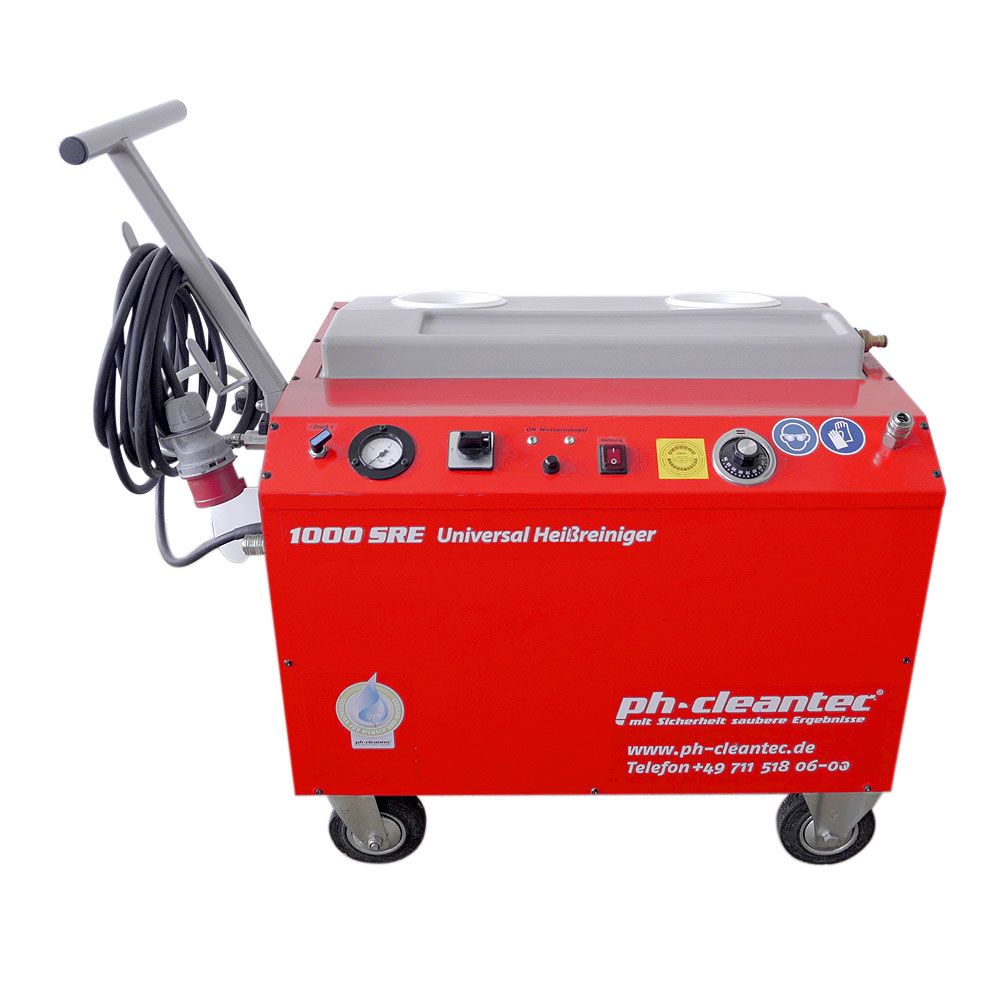
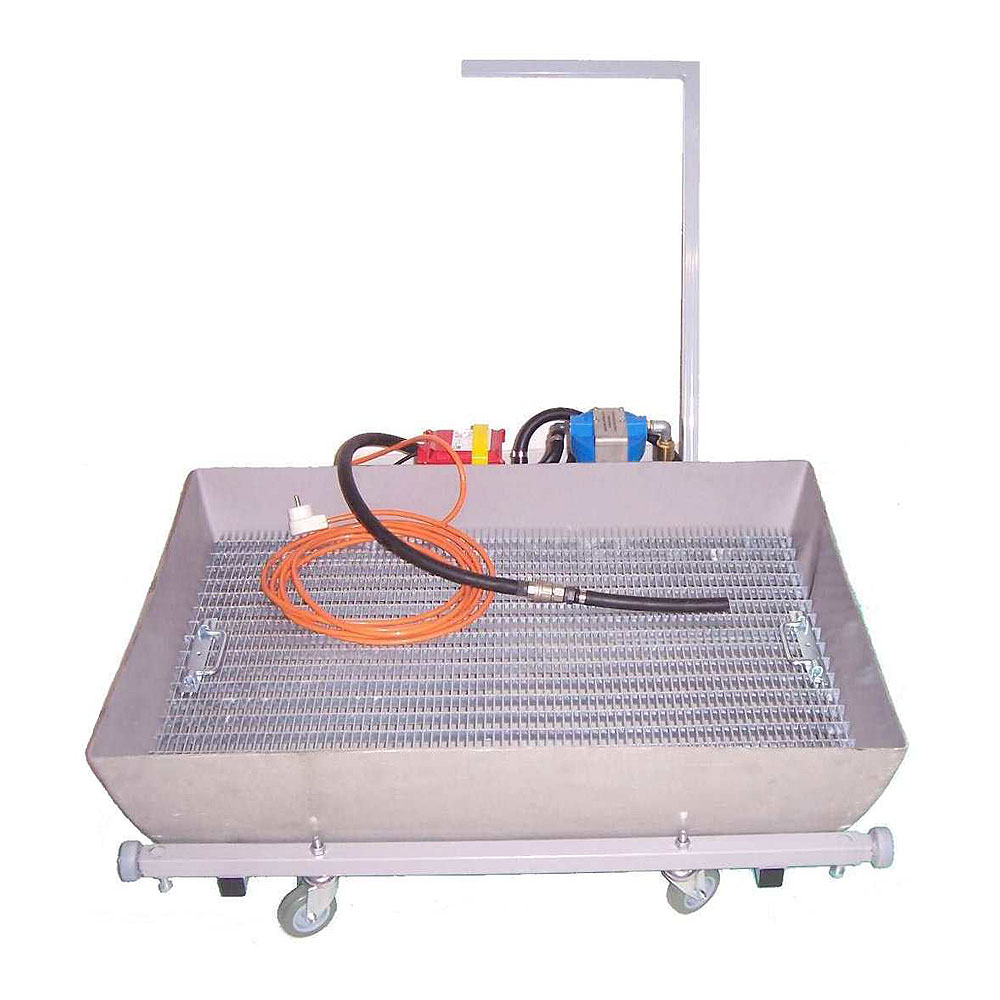
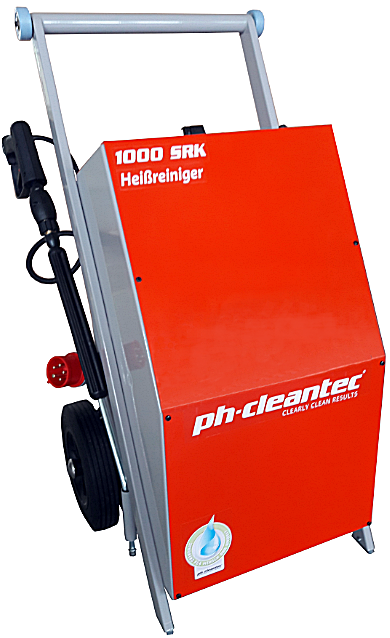
Both hot cleaners are mobile, so you can clean directly on site, and both combine ideally with a 1000 KW-FP dirt water collection tray. This is generally flat enough to fit under the radiator and collects the service water, filters it and – in the case of the 1000 SRE – pumps it back into the cleaning unit. This allows the service water to be recycled as well, making the method even more environmentally friendly.
DOWNLOAD
Cleaning radiators (PDF)Test your radiators in a free demonstration
We clean your radiators with your own real-world soiling on site – so you can see the result directly on your own objects.
Request a free demonstrationCalculate the payback for your case