
Hot and effective
Cost-efficient and health-friendly cleaning in repair and maintenance
Removing even demanding contamination with low-pressure hot-water cleaning
Especially when the effectiveness of cleaning components in production and maintenance leaves something to be desired, it is worth considering low-pressure hot-water cleaning as an alternative.
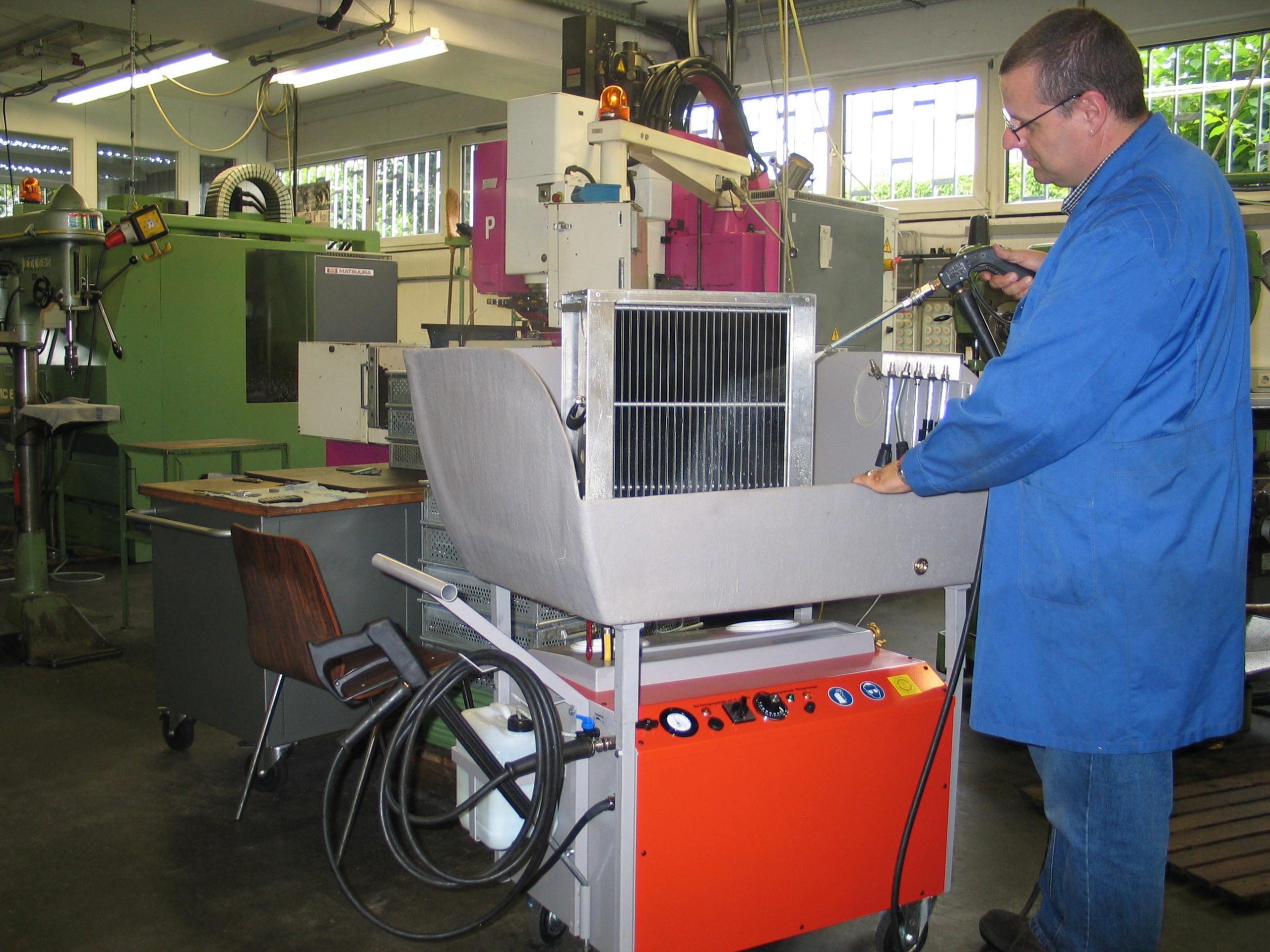
Alongside the effectiveness of a cleaning method, sustainability and health compatibility are increasingly to the fore. This concerns production as well as repair and maintenance, and thus the cleaning of machines and parts. In practice, a multitude of methods is used. Widespread are wash tables in which cold cleaners serve as the cleaning medium.
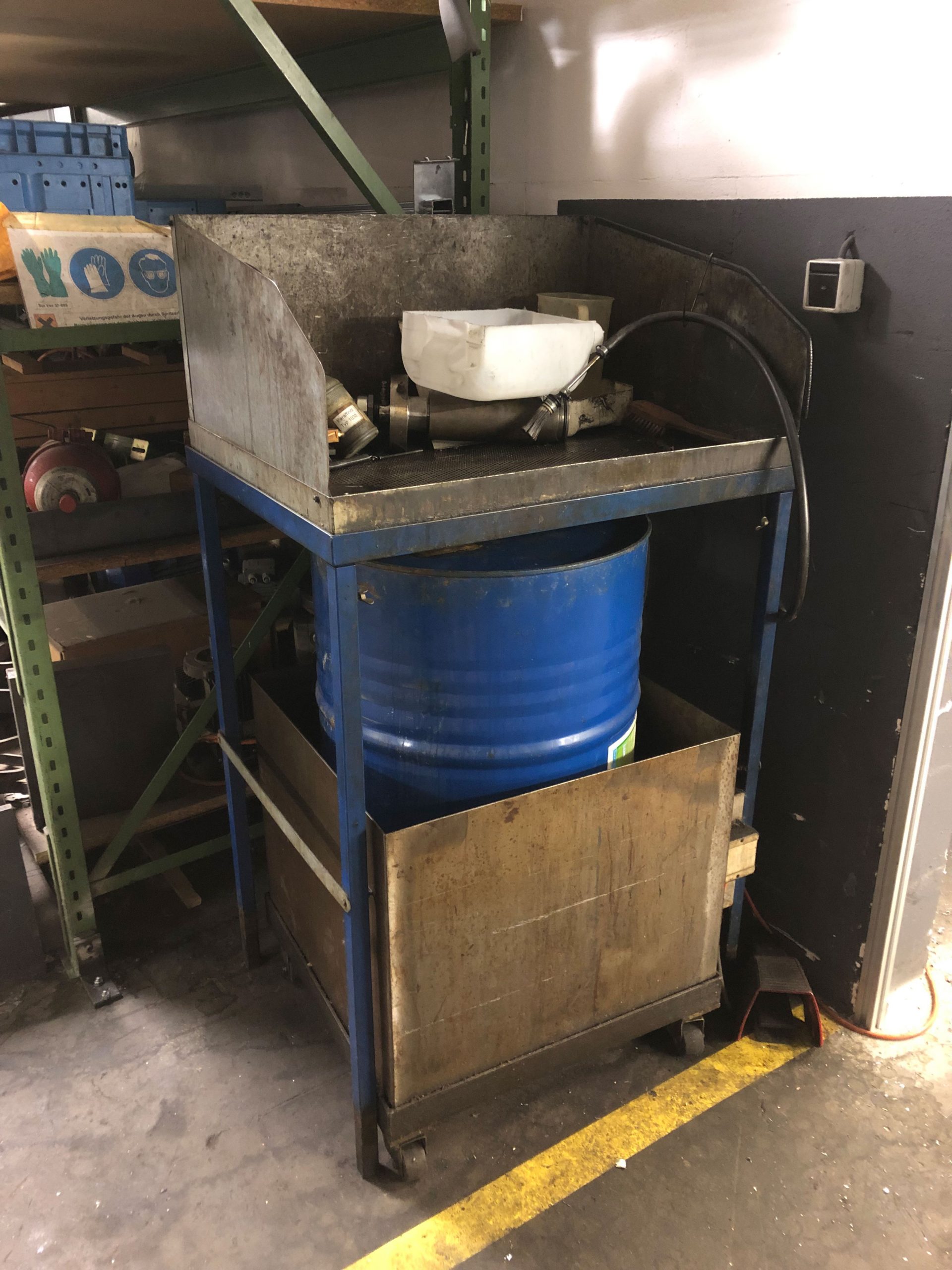
Cold wash tables or brush wash tables
Cold-cleaner wash tables do consume little energy, since no heating power is needed, but the solvents are sometimes highly toxic. They are therefore potentially harmful to the health of the user and can cause severe allergic reactions. In addition, they burden the environment through volatile organic hydrocarbons (VOC). About 20% of these hydrocarbon-based solvents evaporate and thus enter the environment directly, where they burden the ozone layer in particular. The remaining 80% have to be laboriously disposed of and refined.
Bacteria wash tables
In this respect, bacteria wash tables are considerably more sustainable, because a concentrated alkaline cleaning agent is used that is continuously regenerated through the use of bacteria. Oils and greases introduced are thus broken down by the bacteria via a biological-chemical process. However, the bacteria have to be kept constantly at 38°C and consume a correspondingly large amount of energy. Nevertheless, overall they are certainly one of the more environmentally friendly solutions on the market. However, these units too are not mobile, and cleaning hard-to-reach spots such as blind holes and threads can become a test of patience. Practitioners sometimes use compressed air to improve the cleaning effect and to dry the workpieces, and thus distribute the solvent throughout the entire workshop.
High-pressure cleaners
High-pressure cleaners are used when coarse contamination such as mud and earth is to be removed or large areas cleaned, but they are not suitable for small and/or sensitive parts and for use in the workshop. They almost always work without circulation and therefore require a water throughput of 10–20 litres per minute – together with the corresponding energy demand. On top of this, investment-intensive oil separators are prescribed.
Top-loader washing machines
With a larger parts throughput, automatic washing machines, e.g. so-called top loaders, are used. These are a good choice when large quantities of small parts are to be cleaned – or with simply structured surfaces. Coarse contamination, complicated structures or the cleaning of internal geometries can, however, bring the process to its limits. Such top loaders need on average between 100 and 500 litres of water per filling, which has to be heated to 60°C or more during working hours and kept at this temperature. The addition of cleaning agent is proportional to the amount of water and is thus in the upper range compared with the other processes presented.
Brake-cleaner sprays (A1 spray)
Brake-cleaner sprays are not only relatively expensive, they also rank last in terms of sustainability. The removed dirt drips onto the floor and 100 percent of the solvent enters the environment. On top of this, the aerosols and the cans themselves burden the environment.
In addition, the A1 cleaners are a fire hazard, because the flash point is at 21°C, at room temperature. And it is a very expensive solution, since whole pallets are quickly used up. However, these sprays are not infrequently the only way to carry out certain cleaning work – apart from the low-pressure hot-water cleaning system.
Saving time and resources with hot-water cleaning
With low-pressure hot-water cleaners, cleaning is done with water heated to 95°C and low pressures between 3 and 8 bar – a maximum of 14 bar. The units are mobile and need electricity only when the unit is actually running. At 0.8 – 2.8 litres per minute, only very little water is needed. This can be reduced further by running the water in a circuit. The consumption of chemical cleaning agents falls proportionally, because the water-based cleaning process manages with little to no chemicals and without toxic VOC solvents.
Overall, the low-pressure hot-water cleaning system shows clear benefits over the other processes mentioned in terms of environmental and health protection. It is likewise superior on the point of sustainability. Through the fast and effective cleaning without lengthy re-cleaning at hard-to-reach spots, the process also offers considerable savings in time and resources.
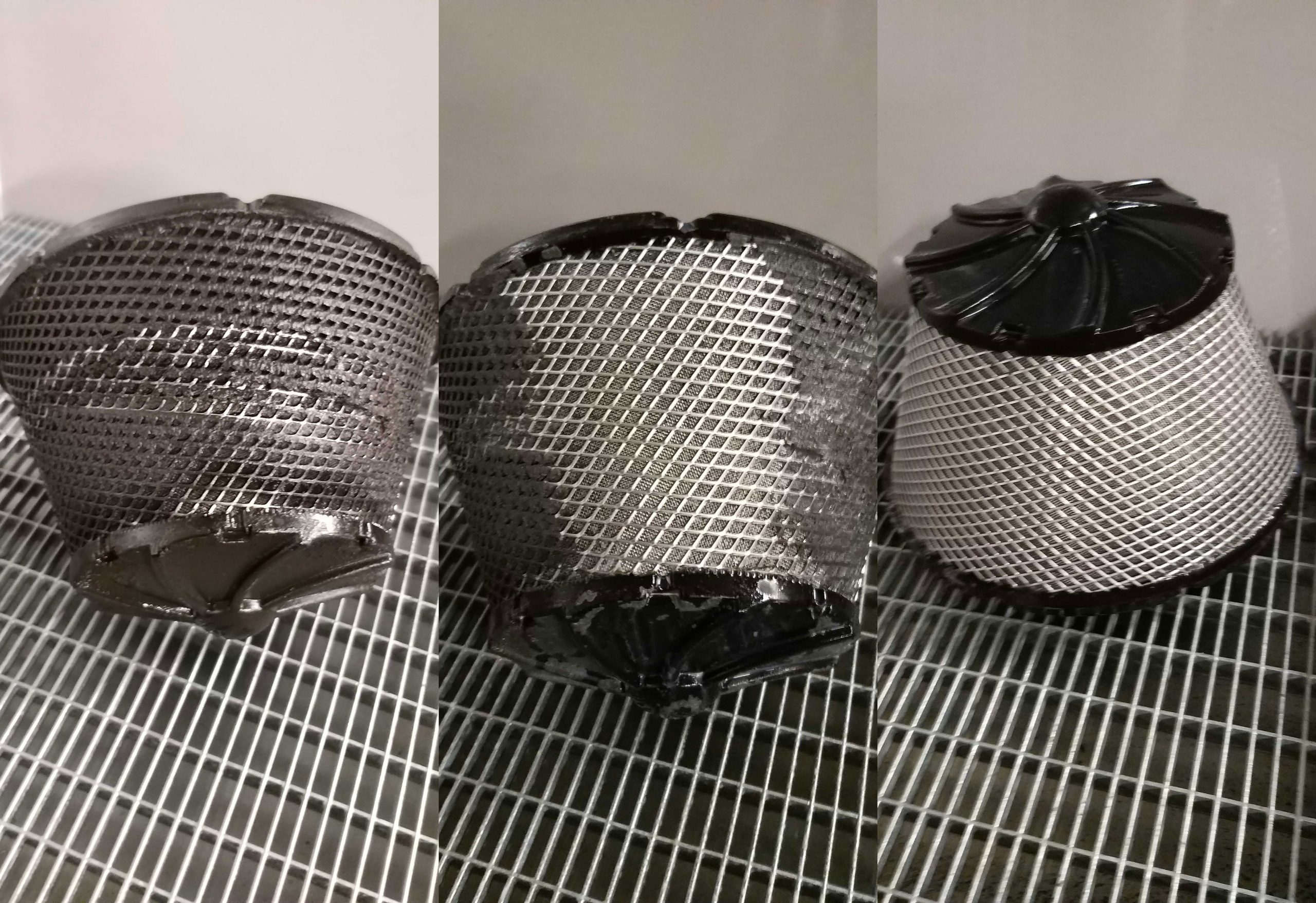
“I know numerous cases where cleaning previously took 30 to 60 minutes at a brush table. The worker was completely surprised when he was finished after just 5 minutes with our low-pressure hot-water unit,” reports Kistowski of ph-cleantec. “Apart from making the work easier, this naturally leads to considerable cost reductions.”
Low-pressure hot-water cleaners are mobile and flexible, and cleaning is therefore possible without any problem on, in or under objects or machines to be cleaned. In terms of application, the system can thus be an adequate replacement for brake-cleaner sprays and wash tables, and additionally complement high-pressure cleaners and washing machines. In summary, not only health and environmental arguments speak for low-pressure hot-water cleaning technology, but also economic benefits such as shorter cleaning times as well as low consumption and investment costs.
See it in your own operation
The most convincing thing is a direct comparison. We are happy to come to your company for a free demonstration – so you can see the savings in time, water and chemicals with your own eyes.
Request a free demonstrationCalculate amortisation