
Cleaning in pasta and noodle production
REQUIREMENTS
The production of noodles involves processing various durum wheat varieties with the addition of water and eggs by mixing, filling, drying, cutting, and wrapping or – as with our customer – vacuum-packing fresh goods.
Units such as (vacuum) mixing systems, filling machines, cutting machines, film sealing units and packaging machines are therefore used.
For cleaning in the food industry, stringent cleaning processes are prescribed for the system parts that come into direct contact with the food. Here, foaming acidic cleaners and alkaline passivators generally have to be used.
These regulations do not apply to the non-contact areas.
The daily cleaning of the contact areas is exceptionally time-consuming: usually one hour per working day and employee is reckoned with. The non-contact areas are cleaned several times a year depending on the application, in this specific case 2–3 times a year.

OUR SOLUTION
Our low-pressure hot-water process enables fast and thorough cleaning, especially of greasy and oily substances, and is therefore ideally suited for use in the food industry. Thanks to the low pressure – 3–7.5 or 3–14 bar – even sensitive parts are not damaged, but contamination is transported away without residue. The cleaning effect is based primarily on the temperatures of up to 95°C, with which greasy and oily residues in particular are loosened optimally.
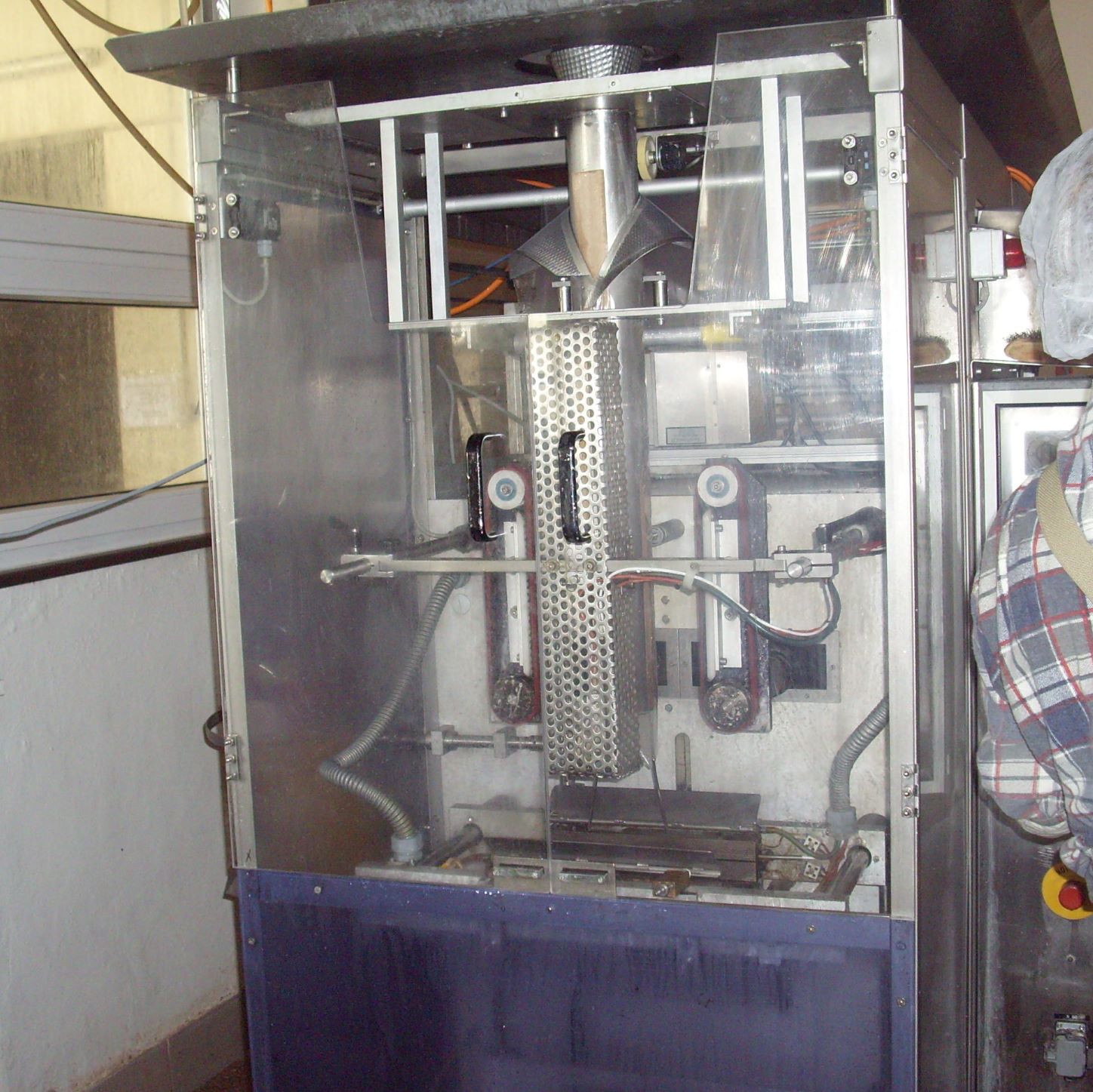
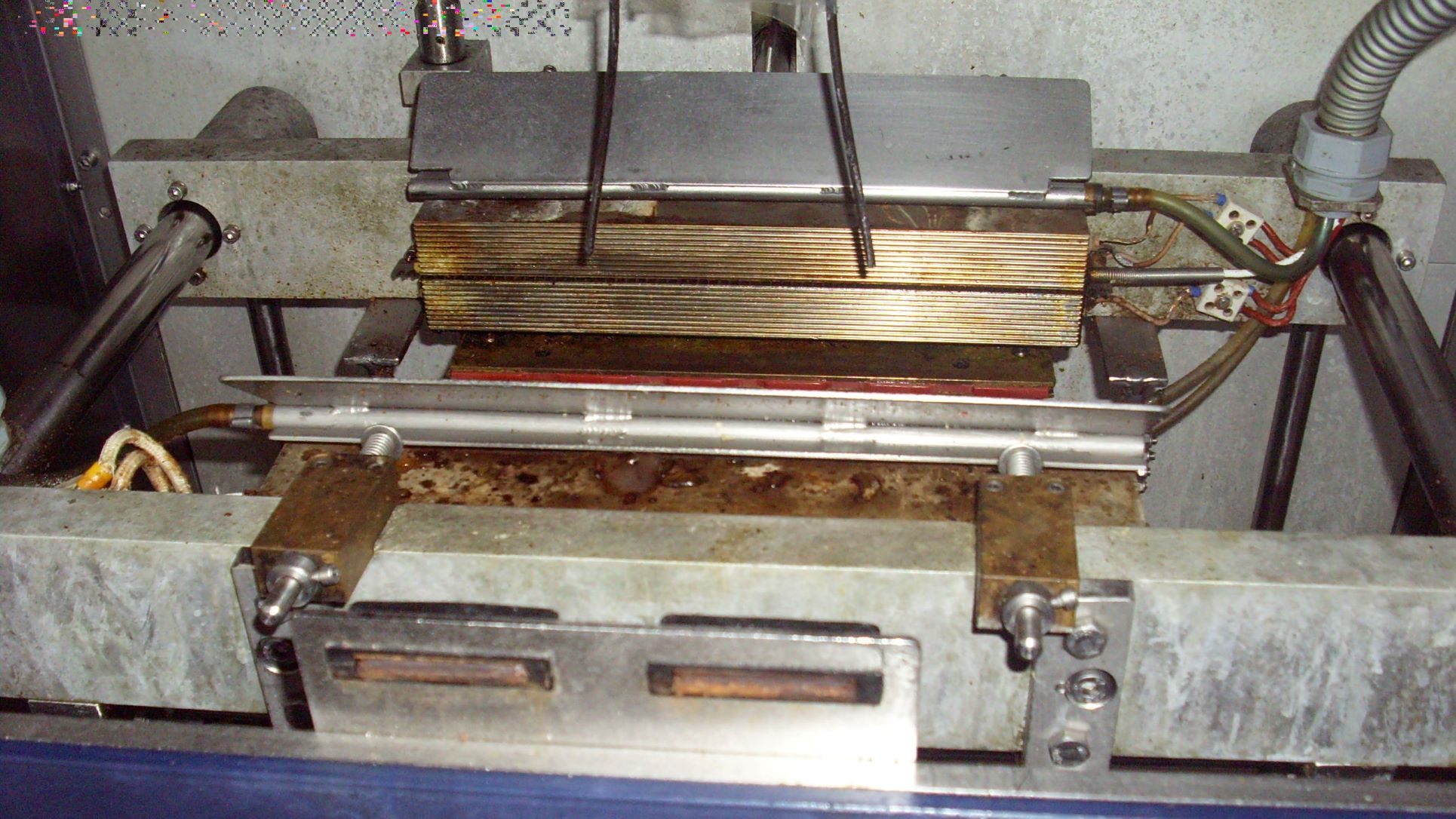
In the specific application, a filling system for fresh goods (Schupfnudeln – potato noodles) was cleaned that was coated with splashes of edible oil as well as heavily resinified edible oil (also baked on). The entire system is thoroughly cleaned about 2–3 times a year, the contact areas daily. The contact and non-contact areas were cleaned.
In some places, heavily resinified edible oils were pretreated with our cleaner A-Turbo; for old and baked-on residues, 3% A-Turbo was in some cases added; everything else could simply be cleaned with hot water.
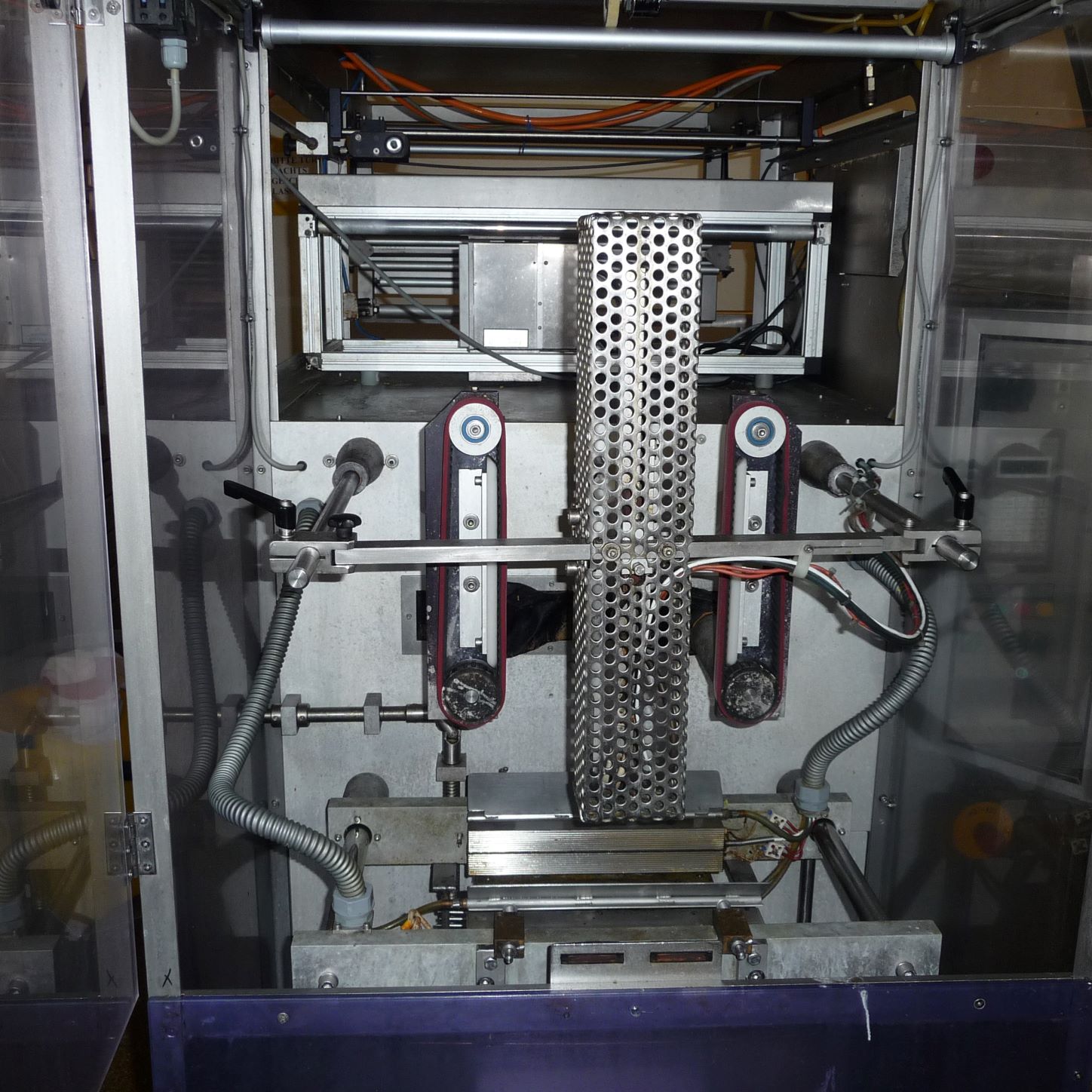
Cleaning with our low-pressure hot-water unit took place during a production break and lasted only a fraction of the usual time. In the opinion of the customer’s employees, the result was more thorough than the previous manual cleaning, and considerably more pleasant than the laborious scrubbing by hand. This applied to both the contact areas and the non-contact areas.
Because of the particularly high hygiene standards, stainless-steel units are mostly used in the food industry.
YOUR BENEFITS
- Efficiency/quality: Fast and thorough cleaning. Easy cleaning even of hard-to-reach or sensitive areas, e.g. under the flaps, behind the rollers of the conveyor belts, on the inside of the U-shaped bent grids and much more.
- Optimal accessibility: Units are mobile and largely self-contained, and can be moved from one place of use to the next.
- Easy cleaning in production: minimal splash-back effects, no droplet clouds, no aerosols and much more.
- Considerably more pleasant work than by hand or with chemicals.
- No damage to sensitive parts thanks to the low pressure.
- Cleaning medium: Hot water or deionised water, without added chemicals. Therefore:
- No contamination risk.
- Low costs for procurement and disposal.
- Spontaneous use in an emergency possible at any time.
- Disinfecting effect.
- Occupational and environmental protection, chemicals: No chemicals means higher environmental compatibility, higher occupational safety and reduced costs.
- Economy: Considerably less working time when cleaning, considerably fewer stoppages, hardly any resources, no chemicals, no damage.
- Overall: Comparatively low investment and hardly any running costs, but in return high efficiency and quality.
DOWNLOAD
Cleaning in pasta and noodle production (PDF)Test your parts in a free demonstration
We clean with your specific contamination on site – so you see the result directly.
Request a free demonstrationCalculate amortisation for your case