
Environmentally friendly and clean
The requirements for cleaning in rail operations are varied and often challenging. ph-cleantec offers an optimal and environmentally friendly solution for cleaning surfaces heavily contaminated with oils and greases, such as point-setting systems, rail-lubrication systems and turntables outdoors, but also axles, ball bearings, couplings, motors, heat exchangers, springs etc. In this, generally only little chemicals are used, and the method is thus not only efficient and cost-saving, but also particularly environmentally and health-friendly.
Applications
In contrast to the high-pressure cleaner, ph-cleantec works with low pressure of up to 14 bar, but with high temperatures of up to 95°C. This makes the ph-cleantec method particularly efficient on greasy and oily surfaces, and it can also clean off heavy contamination primarily via the temperature. Thanks to the low pressure, the removed contamination is not distributed right across the workshop.
Thus, while the high-pressure cleaner makes sense for large areas such as the outer walls of carriages, tank wagons, locomotives etc., the strengths of the low-pressure hot-water cleaners lie in cleaning smaller parts and complex or delicate surfaces.
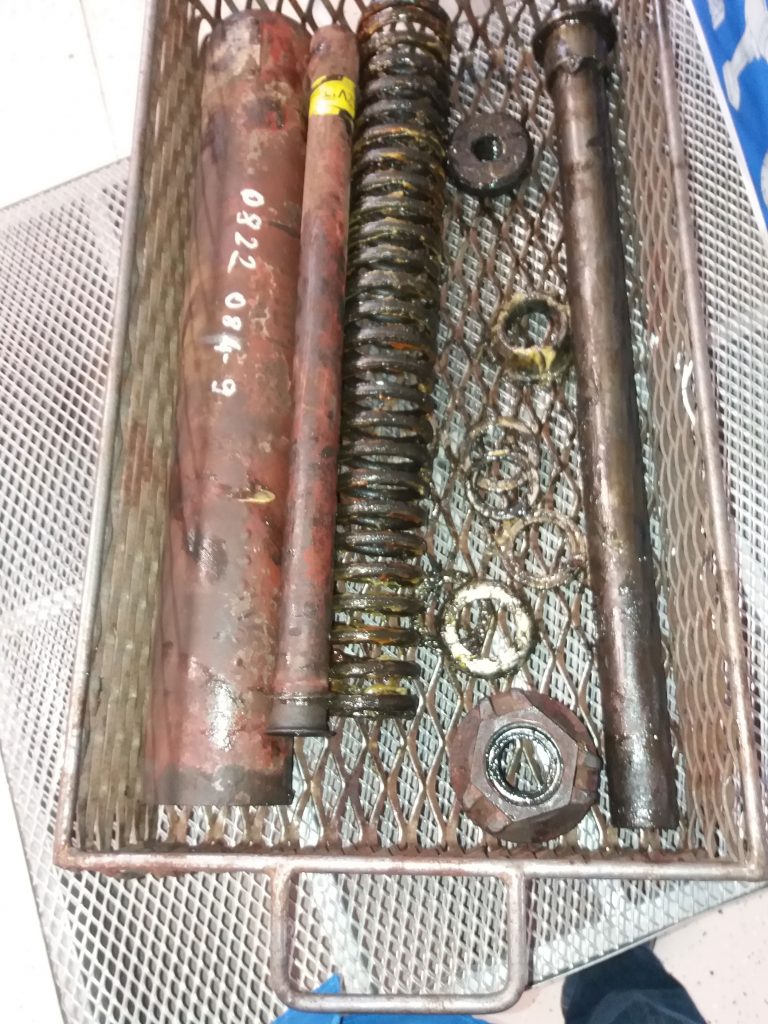
A good example are spindles and springs from the drives or on the axles, which can be cleaned without any problem with the particularly gentle method of the ph-cleantec hot-water cleaners. For this, the ph-cleantec units have trays fitted on top of the unit, the so-called parts-cleaning tray, in which smaller elements can be sprayed off and cleaned very simply with a spray gun and nozzle. In these trays, heavily soiled moving parts can be cleaned.
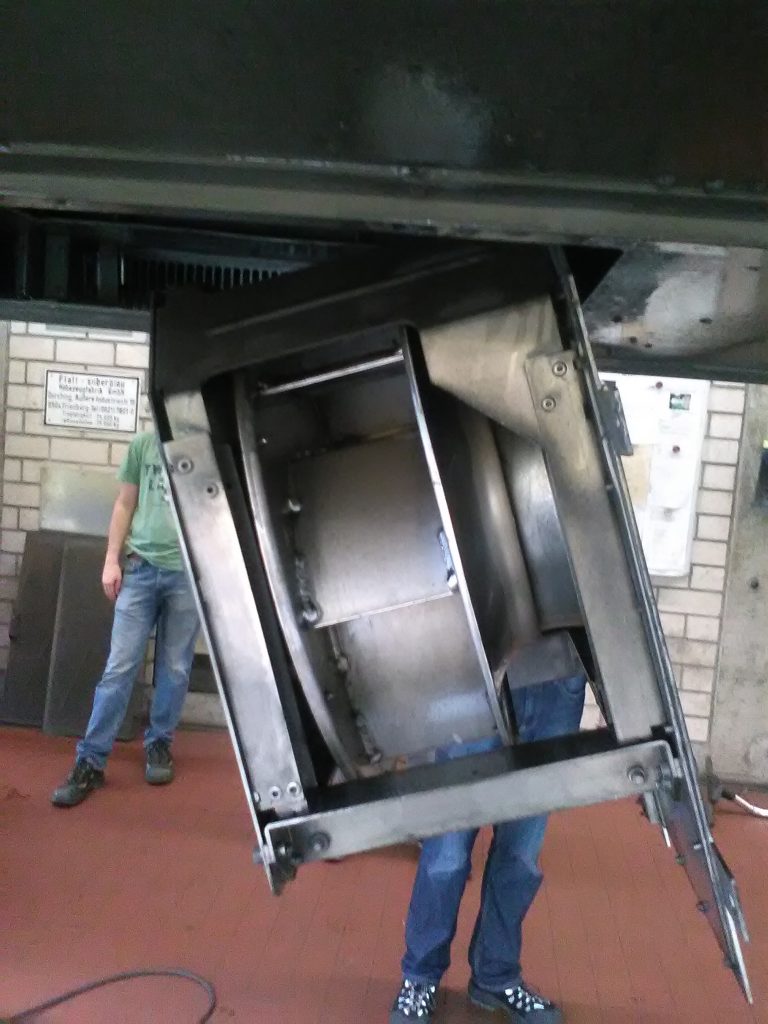
An ideal application is the cleaning of the heat exchangers of the air-conditioning systems, which are generally mounted under the carriages and would be damaged by cleaning with high-pressure cleaners. These can often be cleaned directly on the carriage, since the hot-water cleaning units are mobile and, thanks to a capacity of almost 100 litres of water, largely autonomous, and can be pulled directly up to the carriage. With the help of articulated lances and various nozzles, work can then be done directly on and even under the carriage.
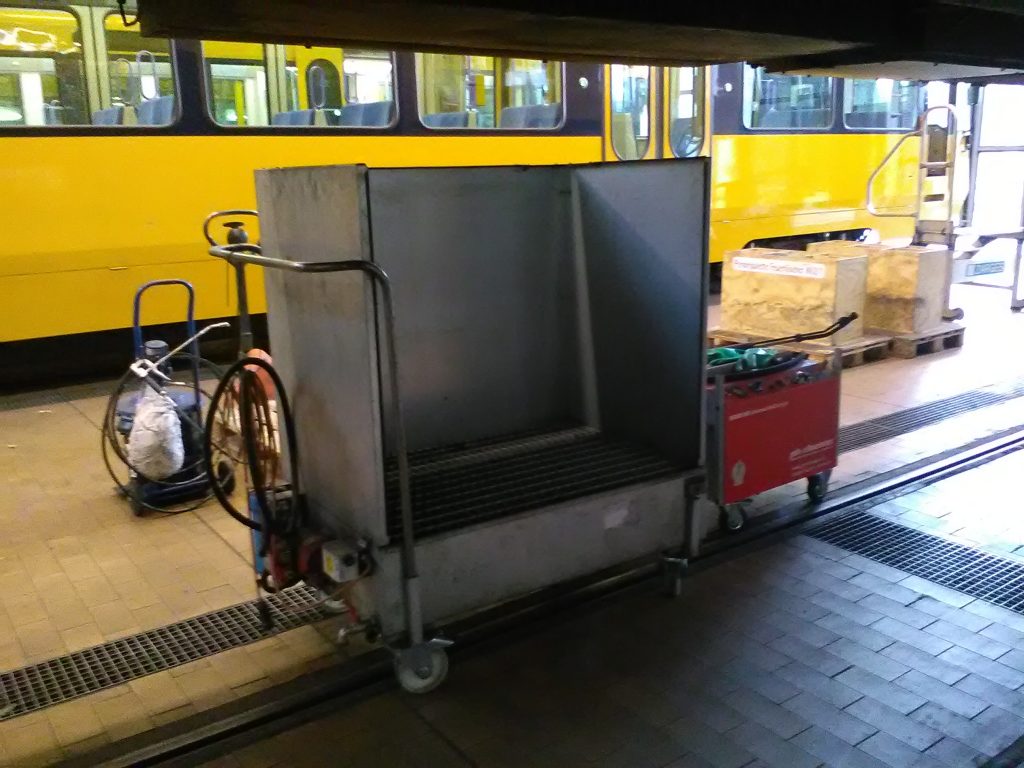
If the heat exchangers have to be removed, or large parts are to be cleaned, then as an alternative to the fitted parts-cleaning trays there are also standalone large trays, normally the size of a Euro pallet, but which can be up to 10 m² in size and hold up to 10 t in weight. In these, large parts such as whole axles, couplings, gearboxes and much more can be lowered in with a crane and then cleaned. For example, on the Paris Metro couplings are cleaned with the ph-cleantec units.
In practice, lubrication systems and the moving parts on signal boxes and turntables outdoors can also be cleaned outstandingly with the ph-cleantec units, and for the tiresome topic of toilet cleaning the hot-water cleaning units are long proven and efficient too.
Finally, the units also come into their own ideally in some special applications, such as with rack and cable railways, as well as with escalators, which are often part of the operation of suburban and underground railways.
Operating principle
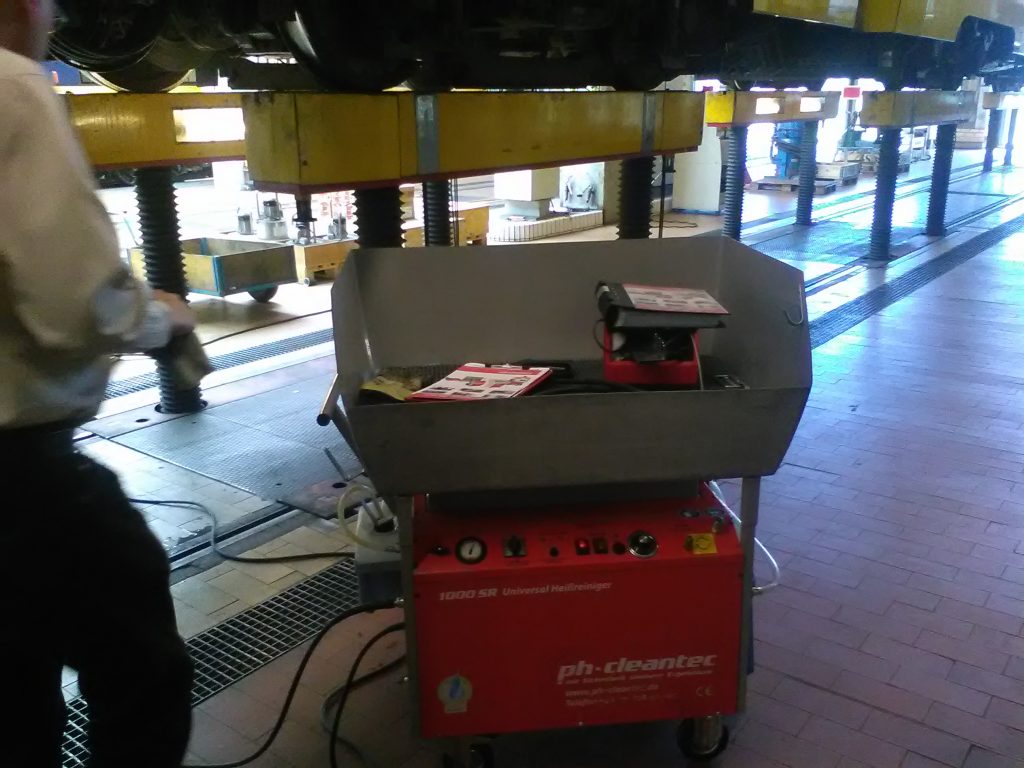
The operating principle of the ph-cleantec units is based on cleaning through high temperatures: as a rule, work is done at 95°C, i.e. just below the boiling point of water. High-pressure cleaners, by contrast, clean primarily with pressure, i.e. with mechanical action. With greasy or oily contamination, however, pressure is often not really efficient – coarse dirt is indeed removed, but a thorough cleaning of such parts with a high-pressure cleaner or even with chemical solutions would often take considerably longer, and not achieve the same cleaning quality as with a hot-water cleaner.
A further major benefit of low-pressure cleaning is that contamination remains in the unit or in the tray – there are no significant splash-back effects, and contamination is carried through the workshop neither by high pressure nor by solvents such as A1 cleaners. The employees no longer stand in a droplet cloud either, and the protective clothing usually necessary with high-pressure cleaners can be dispensed with. Cleaning thus becomes considerably simpler and less cumbersome.
This is additionally promoted by the mobility of the units, which can be brought to the part to be cleaned without any problem. As a result, a prior removal of the respective part is also unnecessary in many cases.
Clear benefits for companies, employees, environmental protection and occupational safety
At the same time, the ph-cleantec units work particularly resource-saving and thus environmentally friendly. This begins with the fact that the cleaning of greasy and oily parts with high temperatures is often much faster than with high pressure – that in itself already saves working time and resources.
In addition, the ph-cleantec units need only a fraction of the water of a high-pressure cleaner: while a high-pressure cleaner records a throughput of 20–30 litres per minute, the ph-cleantec units need just 1.8 litres or 2.8 litres per minute, i.e. one tenth. This is reduced further by the fact that, with the low-pressure units, the water can be collected in the tray and recycled several times. As a result, only one tenth of the added chemicals is needed too, and these can be reused several times together with the water. Thus the employer not only saves expensive working time and resources, but at the same time makes a considerable contribution to environmental protection, by saving up to 90% and more water and chemicals.
As a highly pleasing side effect, working with low pressure is also a gain from the perspective of occupational safety: injury risks are practically excluded, because there is no risk from parts catapulted by high pressure. In addition, they are exceptionally health-friendly, because there is no need to work in a possibly chemically laden droplet cloud, and thus there is also no risk from inhaling or contact with health-burdening chemicals.
Overall, a clear win-win for employers, employees, environmental protection and occupational safety!
See it in your own operation
The most convincing thing is a direct comparison. We are happy to come to your company for a free demonstration – so you can see the savings in time, water and chemicals with your own eyes.
Request a free demonstrationCalculate amortisation