
Cleaning starch and gluten off decanter centrifuges and screws
REQUIREMENTS
Industrial large mills use, among other things, decanter centrifuges from GEA, with which up to 40 t of grain per hour can be ground and transported away with the help of built-in progressive-cavity (eccentric-screw) pumps.
The centrifuges are up to 5 m in size and several tonnes in weight. They typically remain in continuous use for a whole year. During this period, starch and gluten accumulate on individual components, some of which are heavily baked on and only extremely laboriously removed by hand.
During cleaning, the particularly high hygiene standards in the food sector also have to be met.
PREVIOUS PROCESS
The centrifuges are dismantled as part of the annual maintenance, and parts such as screws, housings and the actual centrifuges are cleaned individually by hand with rags, in some cases with the help of various chemicals.
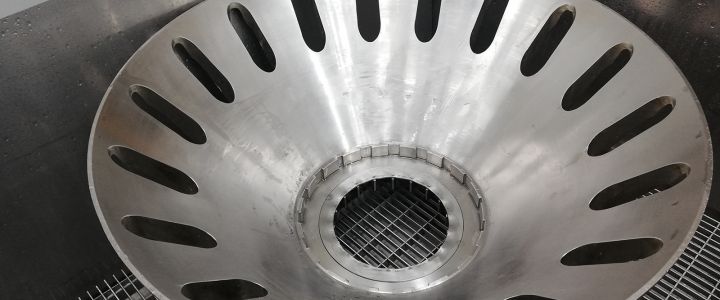
For the parts shown here, at least one hour each was needed for manual cleaning.
OUR SOLUTION
The ph-cleantec low-pressure hot-water process works with low pressures of 3–7.5 or 3–14 bar combined with high temperatures of up to 95°C.
The low pressure is sufficient to rinse off contamination and supports the cleaning. The actual cleaning effect, however, results primarily from the high temperatures.
Starch, in turn, becomes soft at about 40°C, so that the method is ideal for cleaning starch and gluten.
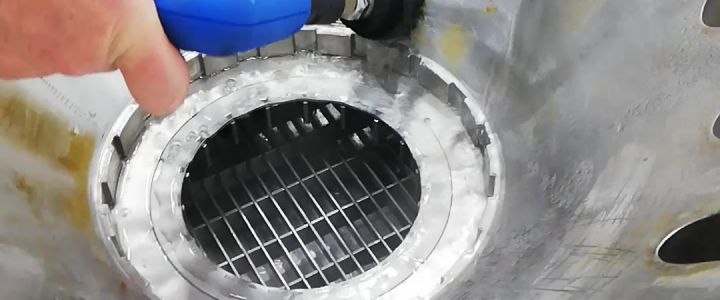
In the specific case, it proved to be the optimal solution to spray the parts briefly with water heated to 95°C. This softened the starch and gluten deposits so that they could be wiped off “just like that” with a normal scouring sponge. A brief rinse completed the procedure.
For the distributor plate of a separator shown in figure 1, about 8–10 minutes were needed. Manual cleaning, on the other hand, had taken over an hour and is also a laborious and unpopular task that can now be eliminated.
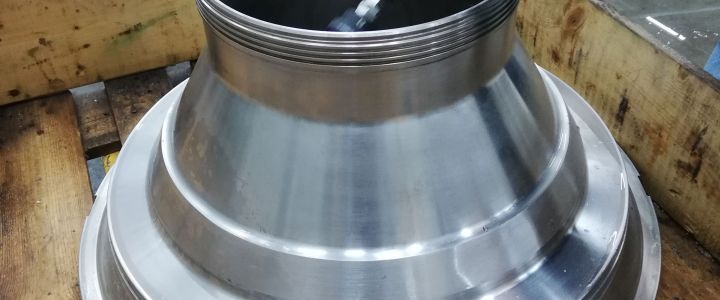
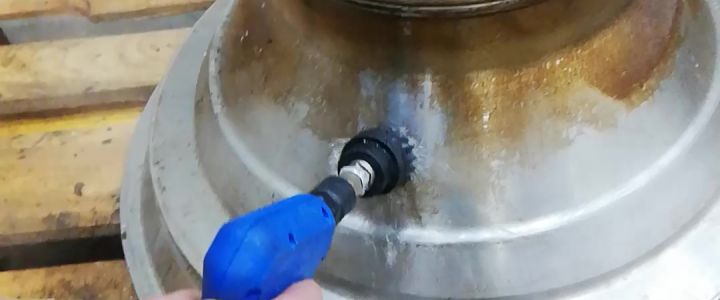
The drum lid shown below also needs 1–2 hours for manual cleaning, but here it could be cleaned completely in less than 10 minutes, in particular the thread on the upper edge.
In the specific case, all the cleaning tasks set were solved without any problem with our process. No chemicals whatsoever were used; work was carried out exclusively with water. The working time could be reduced from over an hour to under 10 minutes.
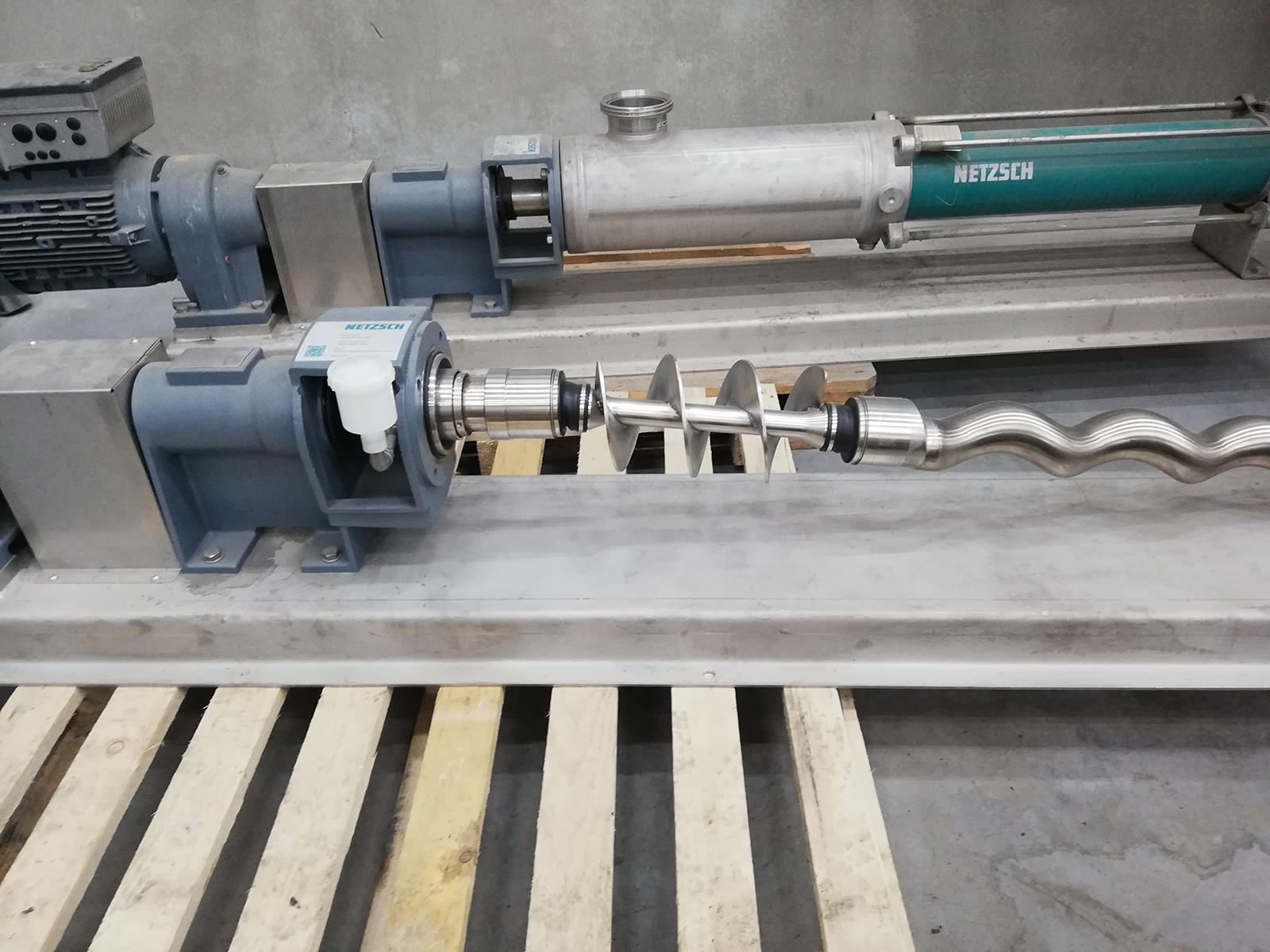
For everyone involved, it was clear that the progressive-cavity pumps and the centrifuge chassis could also be cleaned without any problem and in a fraction of the manual working time, and without chemicals.
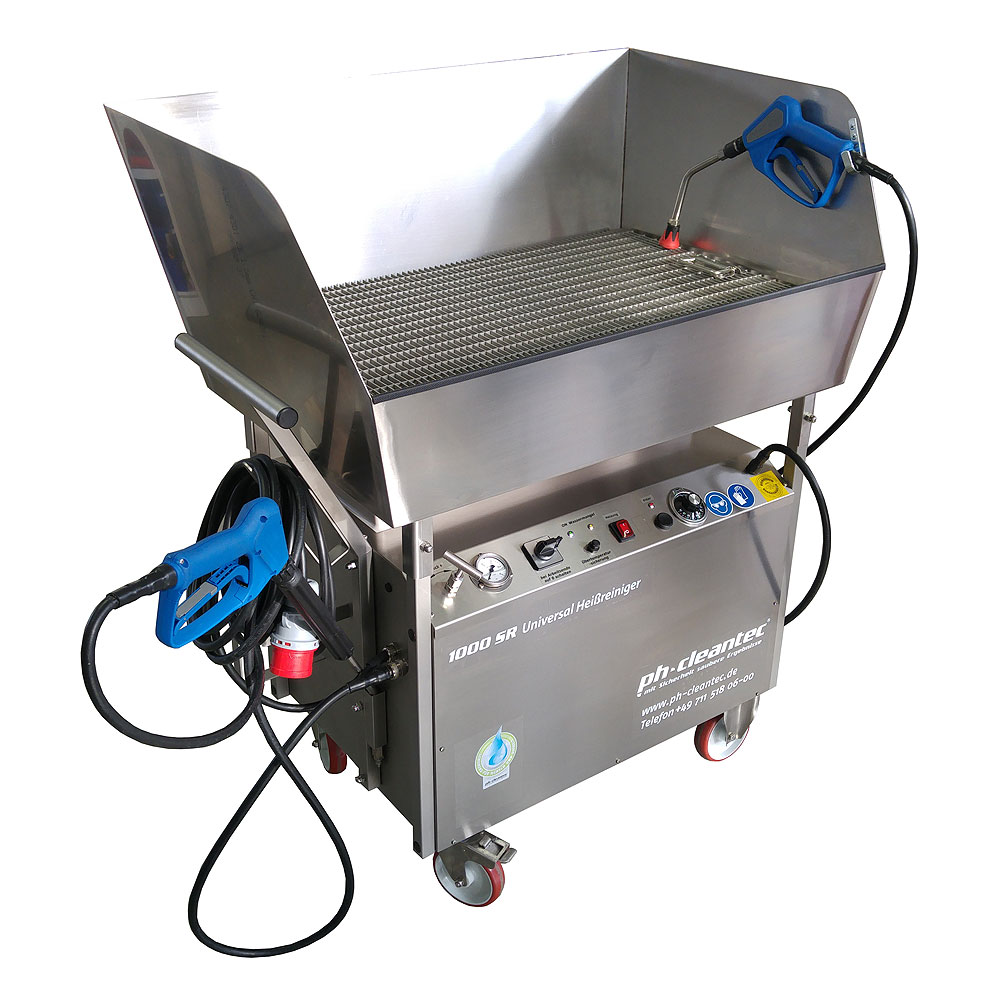
Because of the particularly high hygiene standards, almost exclusively stainless-steel units are used in the food industry.
In the specific case, a 1000 ESR with stainless-steel chassis was used.
The distributor plate according to fig. 1 was cleaned directly in the stainless-steel tray of the 1000 ESR. The process water could thus be run in a circuit and reused several times.
YOUR BENEFITS
- Cleaning of baked-on starch and gluten easy and thorough, since these soften from 40°C; considerable time savings and pleasant work.
- No damage to sensitive parts thanks to the low pressure.
- Mobility: Units are mobile, self-contained and can be transported without any problem from one place of use to the next. At the same time minimal space required.
- No major splash-back effects, no droplet clouds, no aerosols and the like, therefore usable without any problem in production halls or in maintenance
- Occupational and environmental protection: Cleaning with water instead of chemicals spares the environment, increases occupational safety and reduces costs.
- The high hygiene requirements of the food industry can be met without any problem with stainless-steel units of the 1000 ESR type.
- Economy: Considerably less working time when cleaning, considerably fewer resources and no chemicals mean considerable cost-saving potential and a short amortisation period.
- Overall: Low investment and minimal running costs, but in return high efficiency, high cleaning quality and considerable savings in working time and resources.
Test your parts in a free demonstration
We clean with your specific contamination on site – so you see the result directly.
Request a free demonstrationCalculate amortisation for your case