
Cleaning confectionery packaging machines
REQUIREMENTS
In the food and confectionery industry, various packaging machines are used. The areas of application range from sweet to chocolate production and packaging. The packaging is made from various material components and in various sizes.
As in all branches of the food industry, packaging takes place under the strictest hygiene conditions; cleanliness is the top priority.
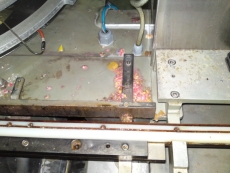
Because of the different materials on the machine and the enormous sticking and adhesive capacity of many confectionery products, unproblematic cleaning is practically not possible.
For example, hard caramel lodges in various and often inaccessible spots, so that production interruptions can occur. Therefore, what usually matters above all is a clean removal that meets the hygiene regulations, right into the corners and crevices.
In doing so, damage to the machines from high pressure or sharp objects has to be avoided in any case, since this would lead to high repair costs and downtimes.
In addition, cleaning on the machines should take place in a way that is gentle on health and the environment. Above all, however, cleaning should be cost-effective, fast and effective.
PREVIOUS TECHNOLOGY
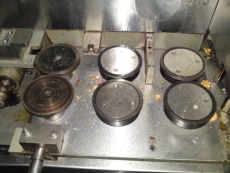
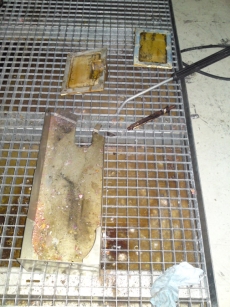
In the specific case, removing the hard caramel posed the greatest challenge. In a first step, the caramel was heated with a hot-air blower. Despite all caution, components were regularly damaged in the process.
The hard caramel was then broken off the machine with a high-pressure cleaner – with the consequence of further damage to components and heavy contamination of the surroundings. In doing so, it was not uncommon to have to resort to hot water, spatula, brush, cloth and cleaner, with the greatest effort by the maintenance staff.
Overall, cleaning the packaging systems was only possible with great effort and with the full commitment of the maintenance staff. In addition, cleaning was exceptionally time-consuming because of the need to clean as free of damage as possible.
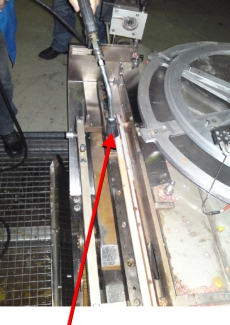
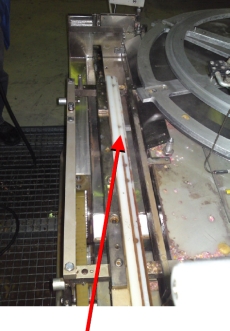
High rinsing performance right into the joints and socket heads of the screws
OUR SOLUTION
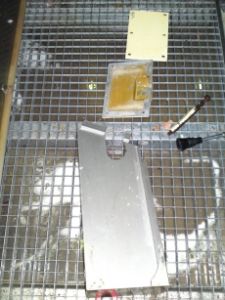
Low-pressure hot-water cleaning works with low pressures of 3–7.5 or 3–14 bar and high temperatures of up to 95°C. The pressures are sufficient to rinse off contamination, but cleaning is achieved primarily through the high temperatures. These are ideal for greasy and oily residues such as sesame and linseed oil, but also for flour, sugar and – as in the specific case here – for caramel.
In the concrete case of a confectionery factory, all cleaning tasks could be solved without any problem with the low-pressure hot-water process. Work was carried out exclusively with pure water and no chemicals whatsoever were used.
Here too it turned out that, especially for larger areas and/or firmer contamination, it makes sense to work with a little more pressure. For these applications we therefore recommend our double-pump units (1500 SR-DP or 1500 SRE-DP), and in the stainless-steel version, in order to meet the high hygiene standards of the food industry.
Before
After
YOUR BENEFITS
- Efficiency/quality: Fast and thorough cleaning. With the right spray accessories, also easy cleaning of hard-to-reach or fragile areas, e.g. at the rollers of conveyor belts, electric motors, cutting machines.
- No damage to sensitive parts thanks to the low pressure.
- Mobility: Units are mobile and largely self-contained, and can be pulled without any problem from one place of use to the next.
- Cleaning in production without any problem: no major splash-back effects, no droplet clouds, no aerosols and much more.
- Occupational and environmental protection, chemicals: No chemicals; this spares the environment, increases occupational safety and reduces costs.
- Economy: Considerably less working time when cleaning, considerably fewer resources, no chemicals, no damage.
- Overall: Comparatively low investment and hardly any running costs, but in return high efficiency and quality.
DOWNLOAD
Cleaning of confectionery packaging (PDF)Test your parts in a free demonstration
We clean with your specific contamination on site – so you see the result directly.
Request a free demonstrationCalculate amortisation for your case