
Cleaning in animal feed production
REQUIREMENTS
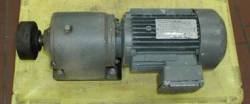
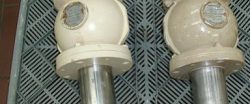
At our customer in animal feed production, the following areas in particular had to be cleaned: motors of production systems, dye-carrying lines and pipes, pumps and valves, as well as the workshop area and the storage silos in general.
The contamination mainly found was:
- Dried-on grain and flour residues (e.g. fish meal); these were frequently mixed with oils from production and from the machines,
- Very colour-intensive and colour-fast dyes, used e.g. to colour fish feed, and
- Usual oily and greasy contamination from the workshop area.
PREVIOUS TECHNOLOGY
In the company there was a cold-cleaner wash table and a high-pressure cleaner. Where the high-pressure cleaner could not be used because of the complexity of the systems or the high water volume, the subject of cleaning tended to be treated as a stepchild. According to the employees, the large animal-feed silos had not been cleaned for decades.
Although the typical workshop contamination was removed with the cold-cleaner wash table, up to now there had been no really satisfactory solution for cleaning the oily flour-grain-dust deposits.
OUR SOLUTION
With the help of the low-pressure hot-water process – low pressure of up to 7.5 or 14 bar and high temperatures of up to 95°C – contamination in the workshop could be removed as usual without any problem. The result could be accelerated further by using an alkaline cleaner.
Above all, however, the typical animal-feed production contamination was removed with ease and in the shortest time. The ease with which outstanding cleaning results were achieved amazed the employees.
For cleaning the storage silos, a unit with higher pressure ranges, i.e. with pressures of up to 14 bar, was a good choice because of the higher area performance.
YOUR BENEFITS
- Efficiency/quality: Fast and thorough cleaning. Thanks to various lances and nozzles, easy cleaning even of hard-to-reach or sensitive areas, e.g. at the valves and motors.
- Optimal accessibility: Units are mobile and largely self-contained, and can therefore be driven up to the machine to be cleaned without any problem. Large parts therefore do not need to be removed.
- Easy cleaning even in production: minimal splash-back effects, no droplet clouds, no aerosols and much more.
- Thanks to the low pressure, no damage to sensitive parts.
- Considerably more pleasant work than by hand or with chemicals.
- Cleaning medium: Hot water or deionised water, without added chemicals. Therefore:
- No contamination risk.
- Low costs for procurement and disposal.
- Spontaneous use in an emergency possible at any time.
- Disinfecting effect.
- Occupational and environmental protection: No chemicals means higher environmental compatibility, higher occupational safety and significantly lower costs.
- Overall: Considerably less working time when cleaning, thus fewer stoppages, better cleaning result, no chemicals, no damage.
- Comparatively low investment and hardly any running costs, but in return high efficiency and quality.
DOWNLOAD
Cleaning at an animal feed producer (PDF)Test your parts in a free demonstration
We clean with your specific contamination on site – so you see the result directly.
Request a free demonstrationCalculate amortisation for your case