
Cleaning on and under trains, suburban and underground railways
REQUIREMENTS
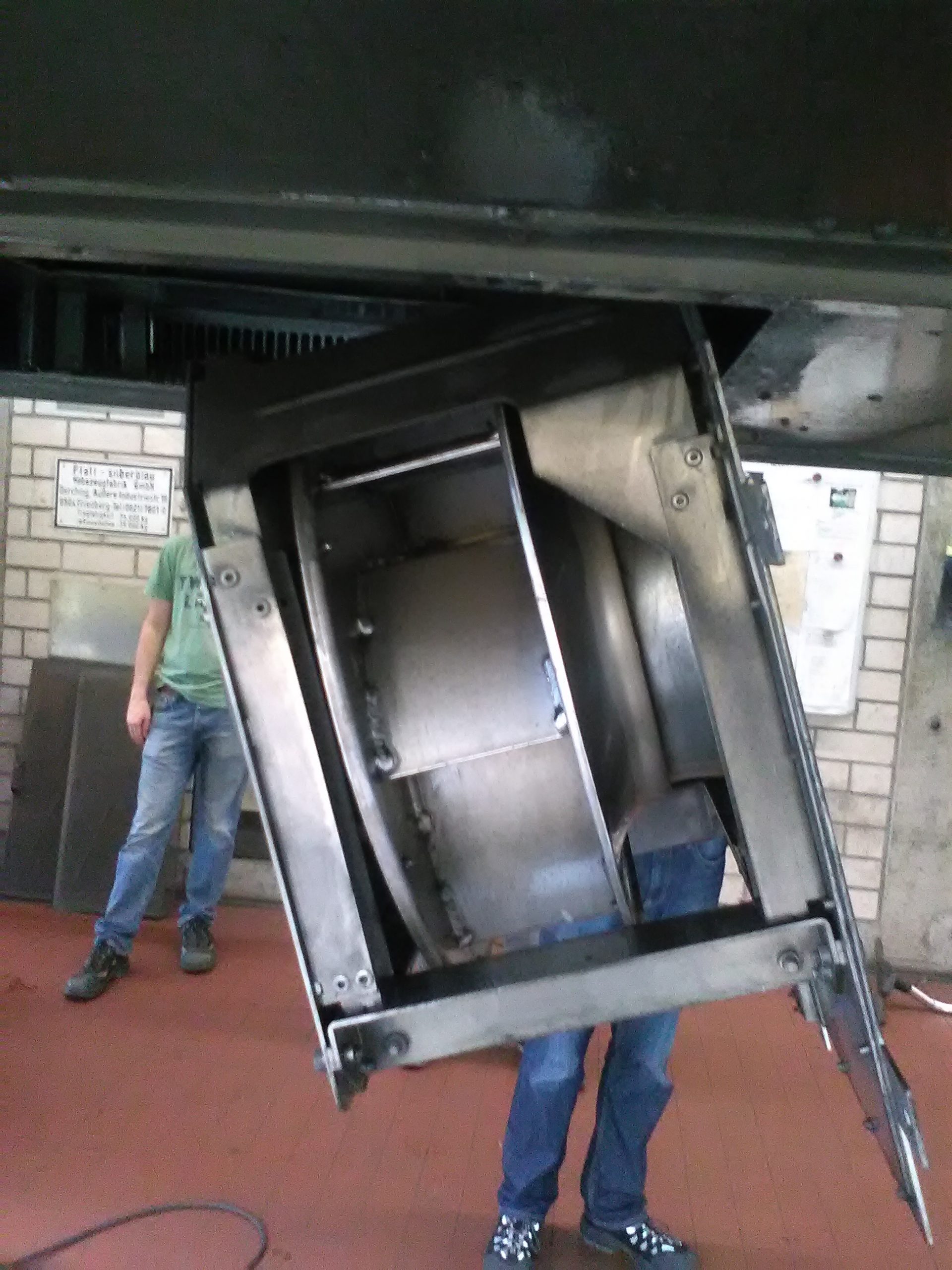
In the case of maintenance and repair, heat exchangers, brakes, compressors etc. have to be cleaned under the trains and railways, i.e. under the carriages.
PREVIOUS TECHNOLOGY
When cleaning on trains and railways, high-pressure cleaners are usually used. This regularly involves the following problems:
- High water consumption;
- Splashing effects and damage: the water spreads all around;
- You stand at an angle to the traction unit, i.e. you cannot reach the heat exchangers in full, for example;
- Certain parts such as heat exchangers can be bent or even irreparably destroyed by high pressure.
OUR SOLUTION
With the help of low-pressure hot-water cleaning, heat exchangers, brakes, couplings and compressors can be cleaned directly on or under the carriage, without damaging the parts and without needing much water.
This is possible because the low-pressure hot-water cleaning units only require 1.8 or 2.8 litres of water per minute – by comparison a high-pressure cleaner uses at least 20–30 litres per minute – and because, owing to the low pressure of up to 7.5 or up to 14 bar, there are no splash-back effects. The cleaning effect is achieved via the high temperatures of up to 95°C, with which greasy and oily or complex surfaces in particular can be cleaned quickly and thoroughly.
At the same time, parts can often be cleaned without being fully removed beforehand, because the lances and nozzles can often clean even otherwise hard-to-reach spots without any problem. This saves time and money and reduces the risks of material breakage and workplace accidents.
YOUR BENEFITS
- Efficiency/quality: Enormous time savings combined with fast and thorough cleaning:
- High temperature and sufficient pressure enable fast and complete cleaning within a few minutes.
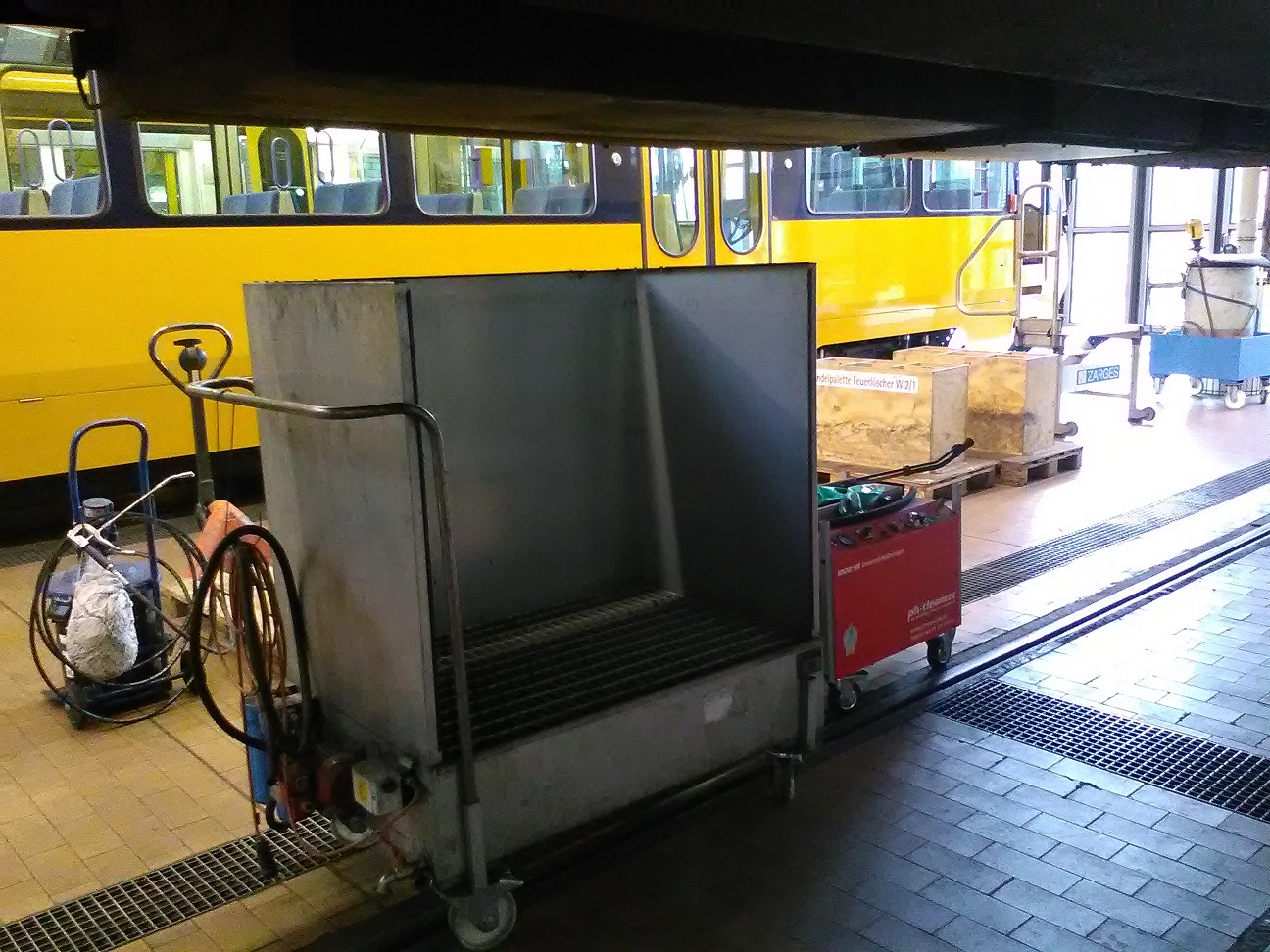
- Minimal space required: Units are largely self-contained and need only very little space; no dedicated wash rooms needed.
- Mobility: The units are mobile and can therefore be pulled to the spot on the carriage that needs cleaning. The operator can go directly up to the component to be cleaned and clean it there in a targeted and efficient way. This saves transport and shunting times.
- Gentle process: At 7.5 and also at 14 bar, no damage to (sensitive) parts.
- No splash-back effects, no droplet clouds, no aerosols, therefore ideal for use in the workshop.
- Cleaning medium: Hot water with no or minimal added chemicals. Minimal costs for procurement and disposal. The cleaning medium can be reused many times over.
- Considerably more pleasant, faster and more efficient work than by hand.
- The units can be used universally and are ideal for parts cleaning of any kind.
- Occupational and environmental protection
- Water consumption one tenth that of high-pressure cleaners.
- Water consumption can be reduced considerably further with the help of the 1000 KW-FP dirty-water collecting tray, by reusing the collected dirty water.
- No or only minimal use of chemicals means greater environmental compatibility, more occupational safety and significantly lower costs.
- This is because the cleaning effect is achieved via the temperature, not via solvents or alkaline cleaners.
- In summary: Low investment, minimal space required, hardly any running costs, but in return high efficiency, outstanding quality and considerable time savings.
DOWNLOAD
Cleaning railway, suburban railway, underground and metro (PDF)Test your parts in a free demonstration
We clean with your specific contamination on site – so you see the result directly.
Request a free demonstrationCalculate amortisation for your case