
Cleaning tanks and tracked vehicles
Special requirements when cleaning tanks
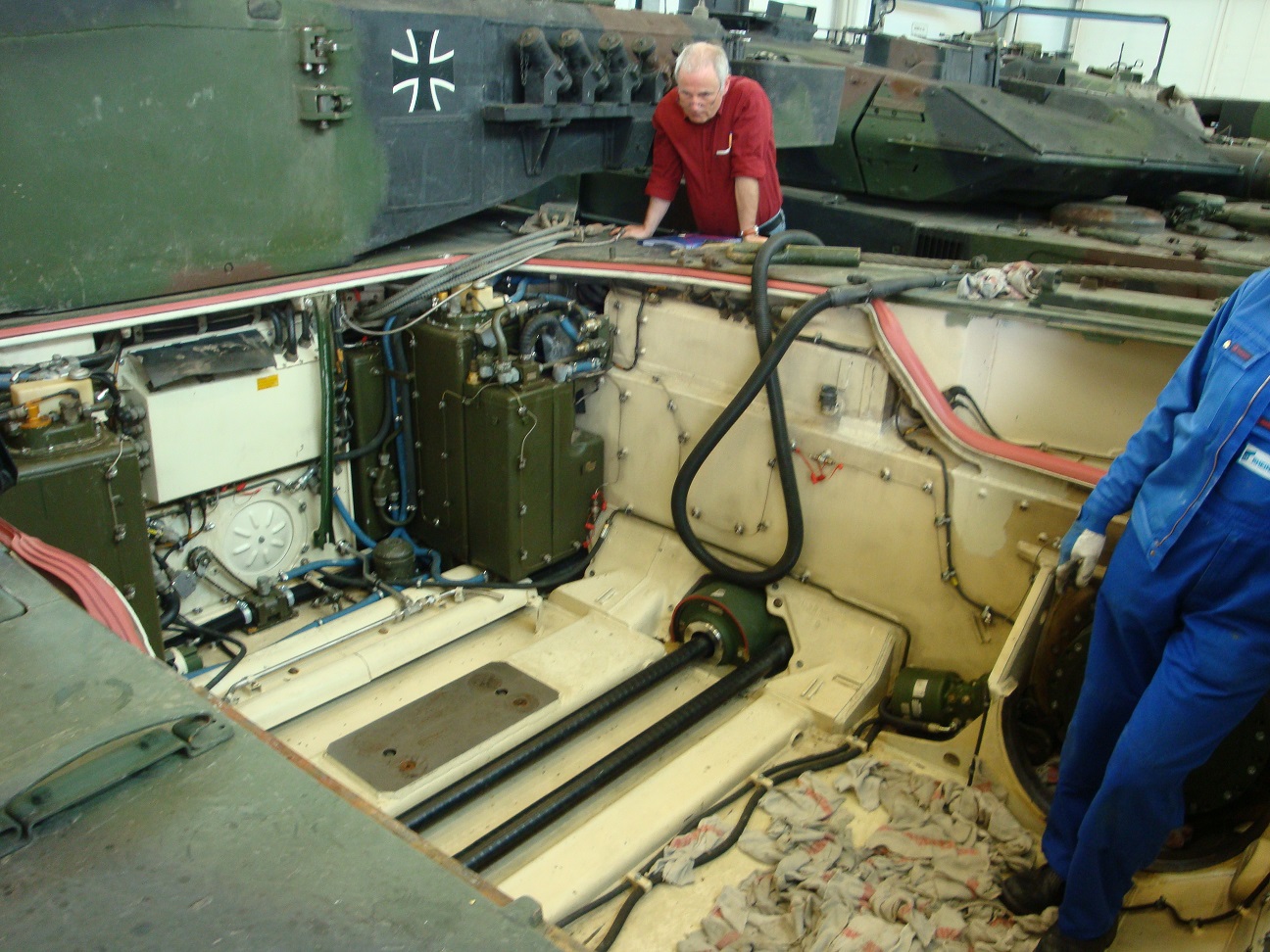
Cleaning tanks requires special techniques and approaches that go far beyond the standard procedures for trucks. Important areas and use cases that require particular attention include:
- Tank hull
- Tank turret
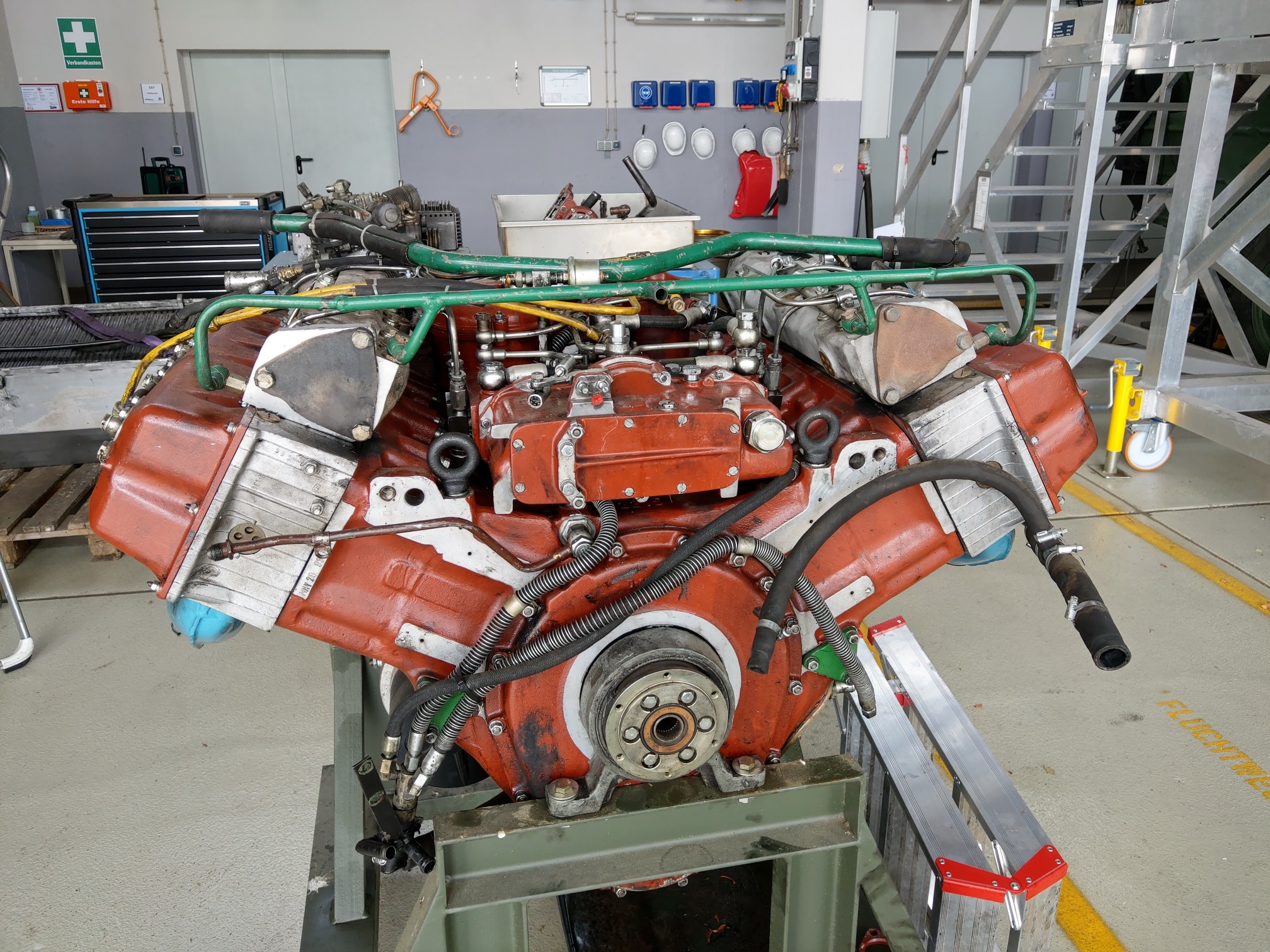
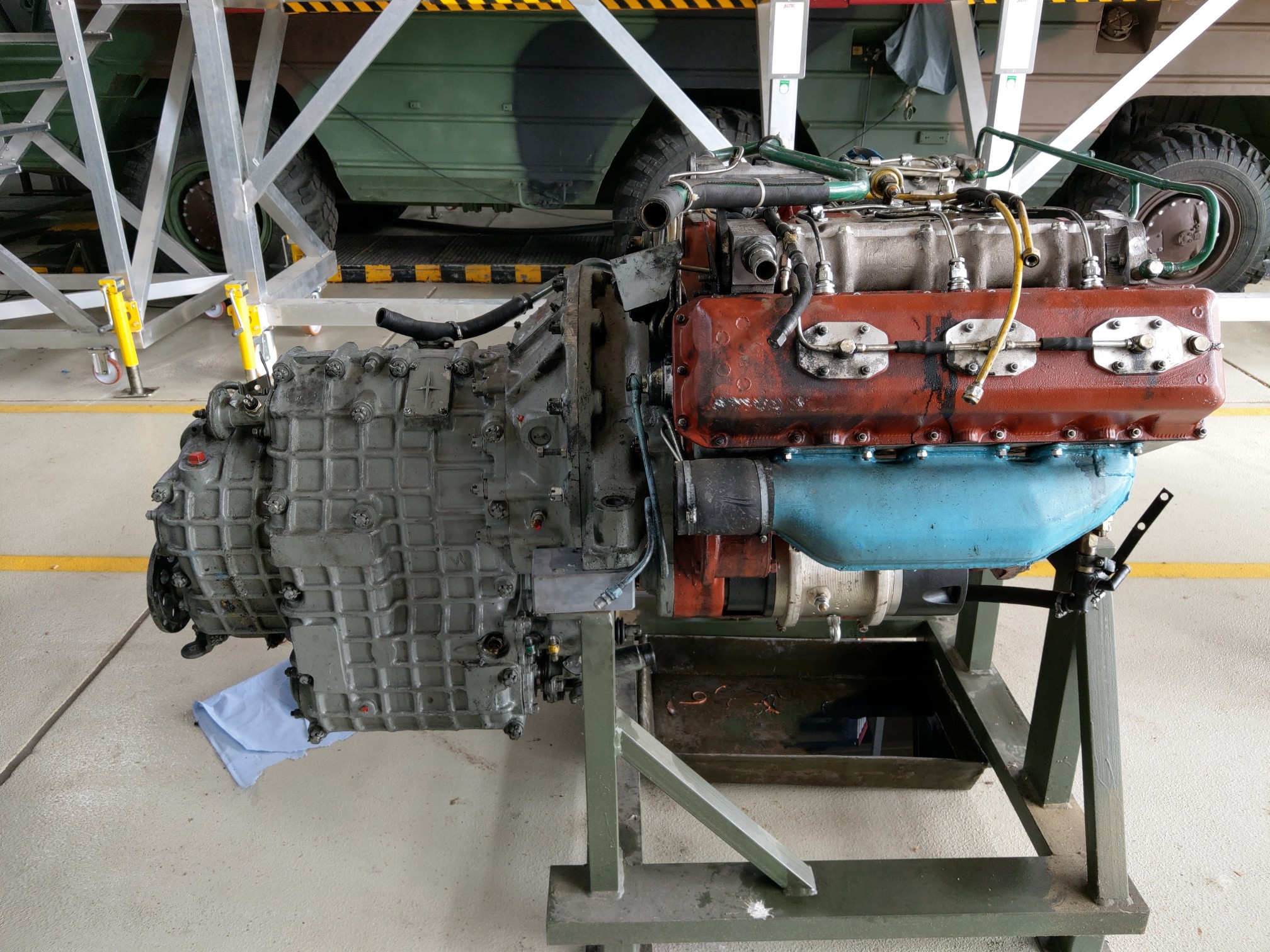
- Engine, engine parts and engine compartment
- Transmission and gearbox
- Torsion bars and torsion-bar suspensions
- Leaks, seepage, burst hoses e.g. during a test run
These components are not only technically demanding but also large and heavy, and usually covered with hard-to-remove used oils and greases. This makes it all the more important to be able to reach these parts well and to clean oily and greasy residues efficiently – ideally without removing the parts.
Conventional techniques for tank cleaning
Tanks and tracked vehicles are often cleaned with A1 cleaners and high-pressure cleaners. High-pressure cleaners are undoubtedly useful for coarser contamination on the outside, e.g. on the bodywork and the tracks. But cleaning the tank hulls or a gearbox, for example, with A1 cleaners or high pressure is simply not efficient in terms of working time and cleaning results. Cold and bio washing tables are inefficient because the parts have to be removed, and large parts such as the tank hull cannot be cleaned at all. Dry ice, too, is far too expensive, far too slow and not available ad hoc, since the dry ice always has to be ordered first.
A1 cleaners are also harmful to health and resources, and cold-cleaner washing tables, too, are increasingly less accepted due to health concerns and are being replaced by environmentally friendly solutions.

Our solution: the innovative low-pressure hot-water cleaning method
By contrast, the innovative low-pressure hot-water cleaning method offers an effective and resource-saving way to clean tanks:
- High temperatures: cleaning temperatures of up to 95 °C quickly and thoroughly dissolve particularly stubborn contamination such as used oils and lubricating greases.
- Low pressure: with a pressure of up to 7.5 or 14 bar, sensitive parts are protected, splash-back is minimal, and the contamination is not spread throughout the workshop; instead, it is removed quickly and effectively.
- Reaching parts without removal: thanks to the mobility of the devices on the one hand and various lances, nozzles and hoses on the other, parts can be reached and cleaned efficiently that would have to be removed and refitted with other methods.
- Environment- and health-friendly: largely dispensing with chemical additives makes low-pressure hot-water cleaning particularly compatible with health and the environment, and saves considerable costs for working time and expensive chemicals.
Instead of the usual solvents (cold or bio washing table, A1 cleaner), an alkaline cleaning agent (essentially soap) can be added in low concentration (1–3%) to further speed up the cleaning. This is usually recycled several times. At the same time, “flooding” is avoided thanks to the low water consumption (1.8 to 2.8 litres per minute).

Advantages of our cleaning solution
Efficiency and quality:
- Considerable time savings thanks to fast, thorough cleaning (often 80–90% less working time).
- Good access even to hard-to-reach spots, thanks to special lances and nozzles.
- Protection of sensitive parts, such as cables and connectors, thanks to low pressure.
Optimal working conditions:
- Minimal splash-back and no aerosols
- Cleaning is often possible directly on the component and without removal
- Cost-efficient use of hot water with no, or minimal, use of alkaline cleaning agents (“soaps”).
Significantly improved environmental footprint:
- Not using harmful chemicals increases environmental compatibility
- Low costs for procuring and disposing of the cleaning medium.
Versatility and cost-effectiveness:
- A universal cleaning system for various applications and high efficiency
- Comparatively low investment, low resource consumption and little working time result in high profitability and fast amortisation
Tank cleaning with ph-cleantec: how does it work in practice?
In practice, tanks and tracked vehicles are mostly cleaned with 1500 SR-DP devices (up to 14 bar, 32 A), because cleaning with these devices is even faster than with a 1000 SR (up to 7.5 bar, 16 A).
The devices are mobile and have a 60 l tank filled with tap water. Parts inside the tank are usually cleaned with a lance, often together with a separate waste-water collection tray combined with the base unit. Smaller parts are usually cleaned with the help of various nozzles in the dedicated parts-cleaning level.
CONCLUSION
Cleaning tanks and tracked vehicles calls for innovative, environmentally friendly solutions. Low operating costs, low investment and high workplace safety make ph-cleantec’s low-pressure hot-water cleaning method the ideal solution for military workshops, maintenance facilities and service providers in the defence sector.

Further information
Interested in solutions that are both sustainable and cost-effective? Discover our coolant recycling too, which saves money and is environmentally friendly.
DOWNLOAD
Cleaning tanks and tracked vehicles (PDF)Test your parts in a free demonstration
We clean with your specific contamination on site – so you see the result directly.
Request a free demonstrationCalculate amortisation for your case